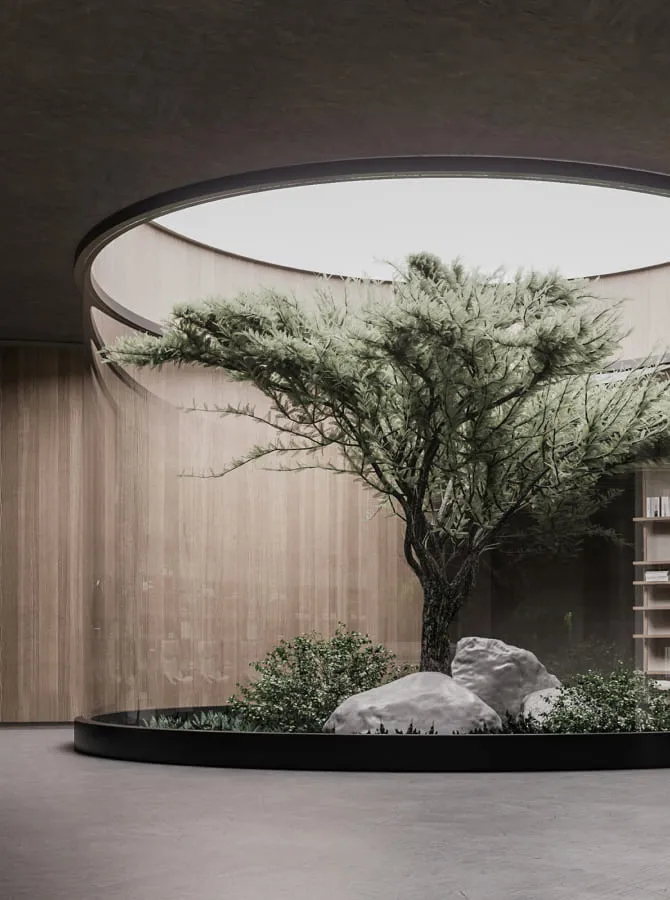
Serhii Makhno designed a WABI SABI apartment for his family. Authentic Ukrainian elements are combined with a minimalistic Japanese style of wabi-sabi.
Type
APARTMENT
Location
KYIV, UKRAINE
Area
370 SQ.M
Year
2017


Type
Location
Area
Year
01
Serhii Makhno designed a WABI SABI apartment for his family. Authentic Ukrainian elements are combined with a minimalistic Japanese style of wabi-sabi.
02
“Japanese culture is a part of me and my inner aesthetics. I appreciate its laconism, natural materials, and rough textures. The truth in simplicity – it’s what my apartment is about”, – Serhii Makhno.
03
Wabi-sabi is a Japanese philosophy which is based on the belief that everything imperfect is beautiful: asymmetry, irregularity, and transience. All these things share a certain roughness, simplicity, and uniqueness that makes them beautiful, despite their imperfect shape and texture.


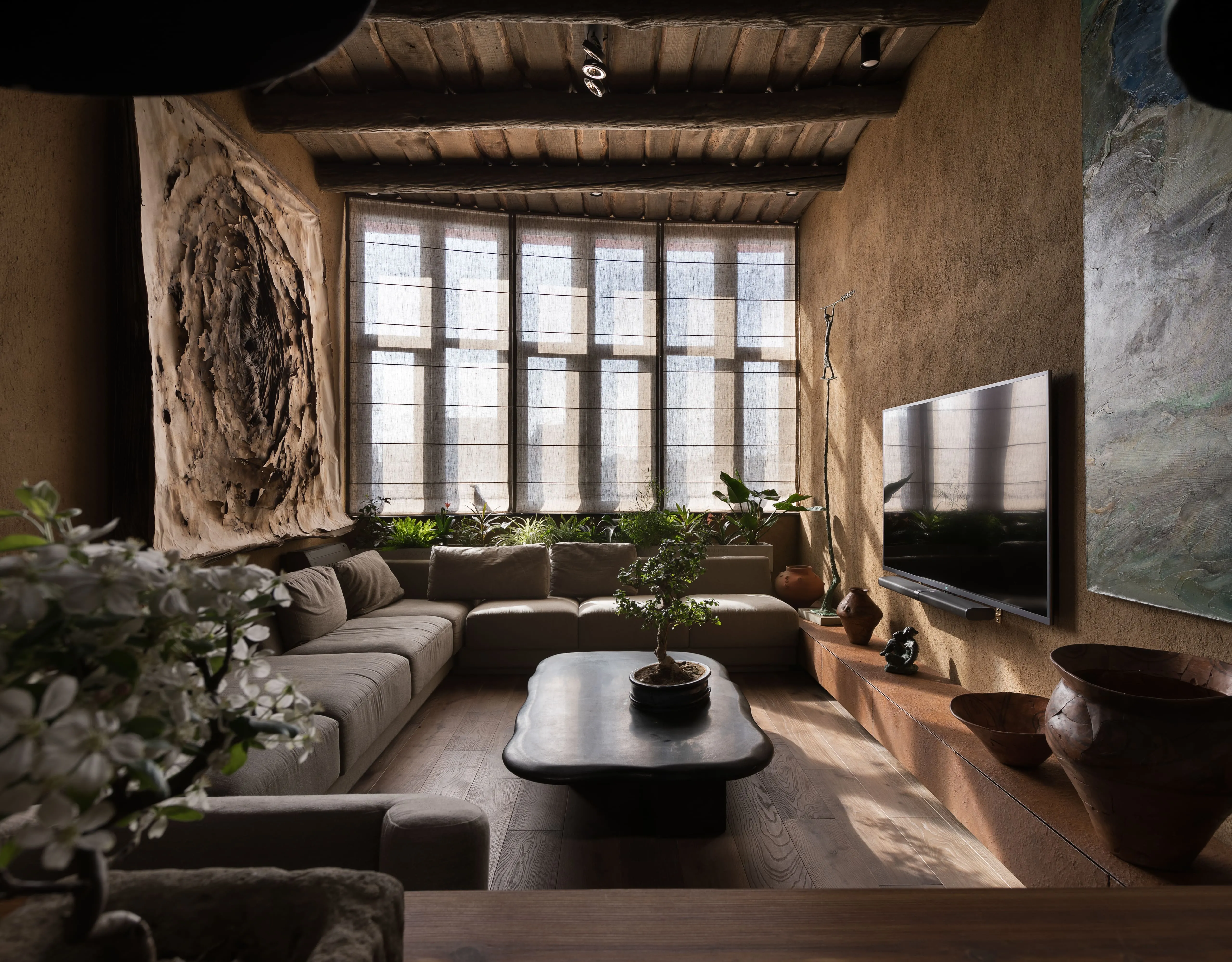
Tactile materials result in a timeless design. The walls were finished with natural clay in an authentic technique, used in old Ukrainian dwellings. The pleasant roughness was complemented by the textures of wooden elements and smooth marble surfaces.


As is often the case with architects who build their own homes, Wabi Sabi's apartment also has some experimental touches, and it features many of MAKHNO Studio's own lighting and furniture designs. The main experiment here was to add a conceptual approach to the overall design based on the theory of the four elements: the earth is represented by clay on the walls, fire and water symbolise various works of art, and the space between objects and rooms is air.


Bonsai trees and a small Japanese-style roof garden further emphasise the oriental character of the apartment, while traditional woven carpets point to Ukrainian craft and culture.


Metal lampshades by MAKHNO, which look more like sculptures than functional objects, hang in the dining room and one of the bedrooms as a way of incorporating a modern element into the overall earthy and natural interior; their imperfection also demonstrates how the ancient philosophy of wabi-sabi can find new applications in contemporary design, making us appreciate the beauty of handmade objects through the use of natural materials.






Tactile materials result in a timeless design. The walls were finished with natural clay in an authentic technique, used in old Ukrainian dwellings. The pleasant roughness was complemented by the textures of wooden elements and smooth marble surfaces.
Clay walls stretch from the ground floor to the hall on the second becoming a focal point of the spaces. A metal staircase with a decorative branch instead of a handrail leads to the private part of the apartment. It consists of a master bedroom and two children’s rooms. A glass wall divides a master bedroom from a bathroom with a sunken bath and garden views.
As is often the case with architects who build their own homes, Wabi Sabi’s apartment also has some experimental touches, and it features many of MAKHNO Studio’s own lighting and furniture designs. The main experiment here was to add a conceptual approach to the overall design based on the theory of the four elements: the earth is represented by clay on the walls, fire and water symbolise various works of art, and the space between objects and rooms is air.
Serhii Makhno designs exclusive furniture, lighting, and décor and most of the objects in his apartment are of special value. The designer likes to interpret traditions in a contemporary way and infuse his interiors with art (the studio’s motto – is “We art the world”). That’s why WABI SABI flat consists of art pieces of different forms. Black copper lamps and blue ceramic ones above the dining area belong to the collection “Earth”. Also, there is a massive smoky lamp in the kitchen and a couple of textured lamps in the bedroom.
Bonsai trees and a small Japanese-style roof garden further emphasise the oriental character of the apartment, while traditional woven carpets point to Ukrainian craft and culture.
The rustic interior of the penthouse stands in deep contrast with the concrete landscape of the city. All the walls in the apartment are finished with clay, and oak beams in the living room give the space a typical appearance of Japanese homes whilst the vases of Cucuteni-Trypillian culture represent Ukraine.
Metal lampshades by MAKHNO, which look more like sculptures than functional objects, hang in the dining room and one of the bedrooms as a way of incorporating a modern element into the overall earthy and natural interior; their imperfection also demonstrates how the ancient philosophy of wabi-sabi can find new applications in contemporary design, making us appreciate the beauty of handmade objects through the use of natural materials.
Wabi Sabi aesthetics is the core of a design concept. The interior shows respect for the old elements. Important points in décor are Serhii’s collection of ceramics and antique home furnishings. Interesting pieces borrowed from the past – 17th-century table in the master bedroom, ancient lavas and wooden vessels which were used for the laundry. Portals between the rooms are decorated with processed trunks of trees on the pristine millstones.