The more you try to explain such things as happiness and serenity, the further the turbulent flow of everyday life moves away from them.
Type
private house
Location
Kozyn
Kyiv
Kyiv
Area
370 sq.m
Year
2019

Type
Location
Area
Year
01
The more you try to explain such things as happiness and serenity, the further the turbulent flow of everyday life moves away from them.
02
The more thoroughly you try to create the perfect interior, the more it looks like one for staying overnight rather than living
03
Today we are going to tell some stories about a house where the main thing is not the colour of the floor, but the kids’ noise. From which, by the way, you cannot hide despite all the tricks of planning.
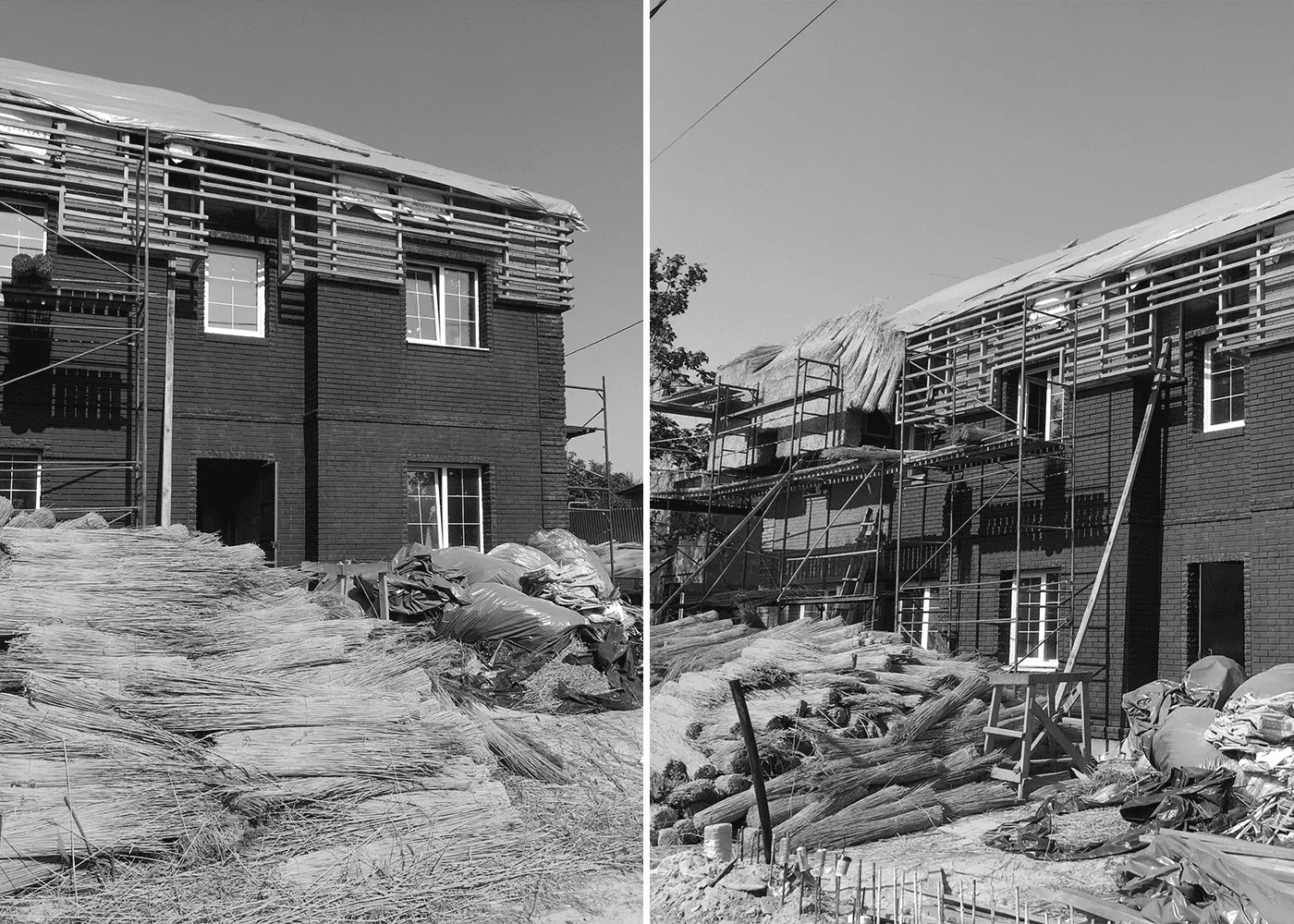
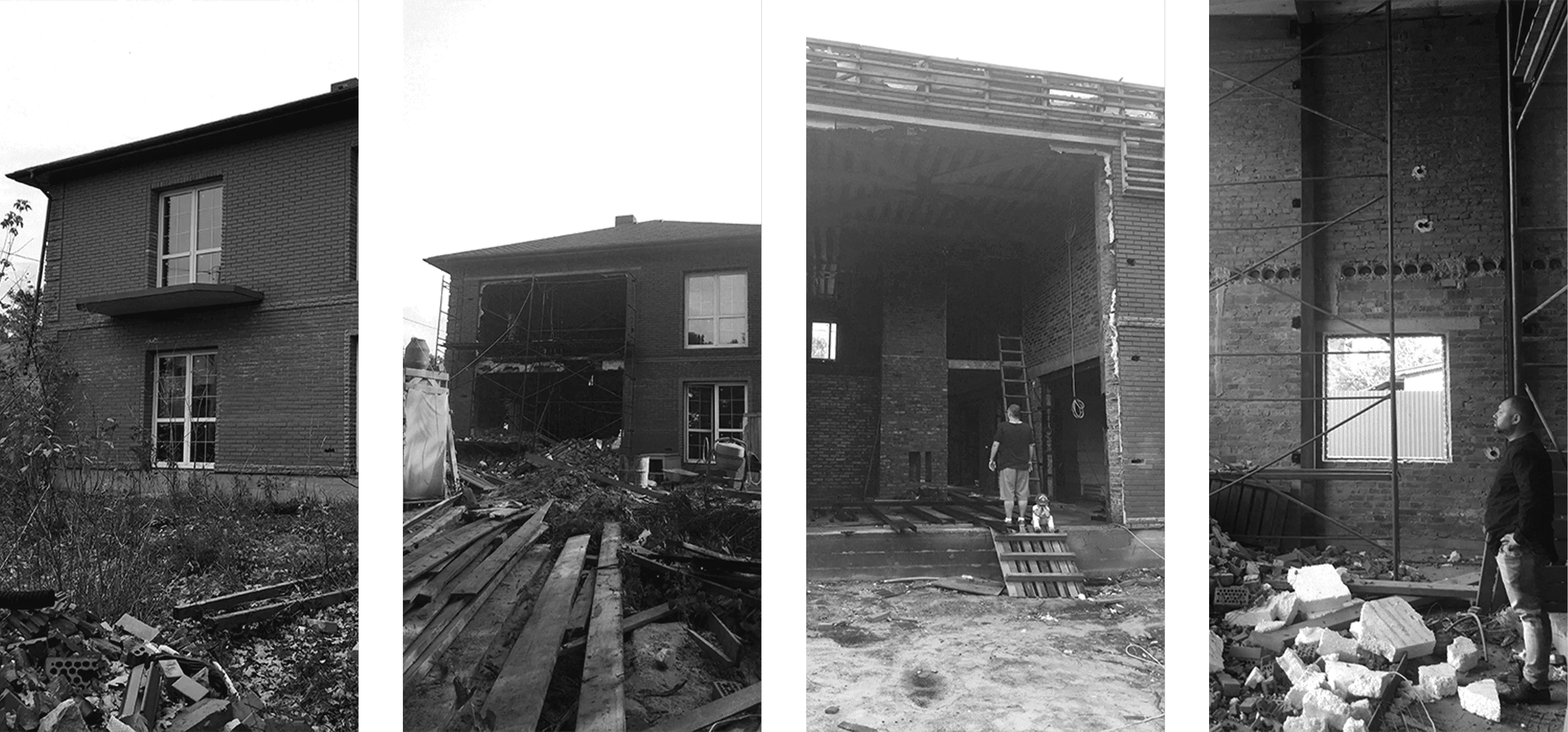
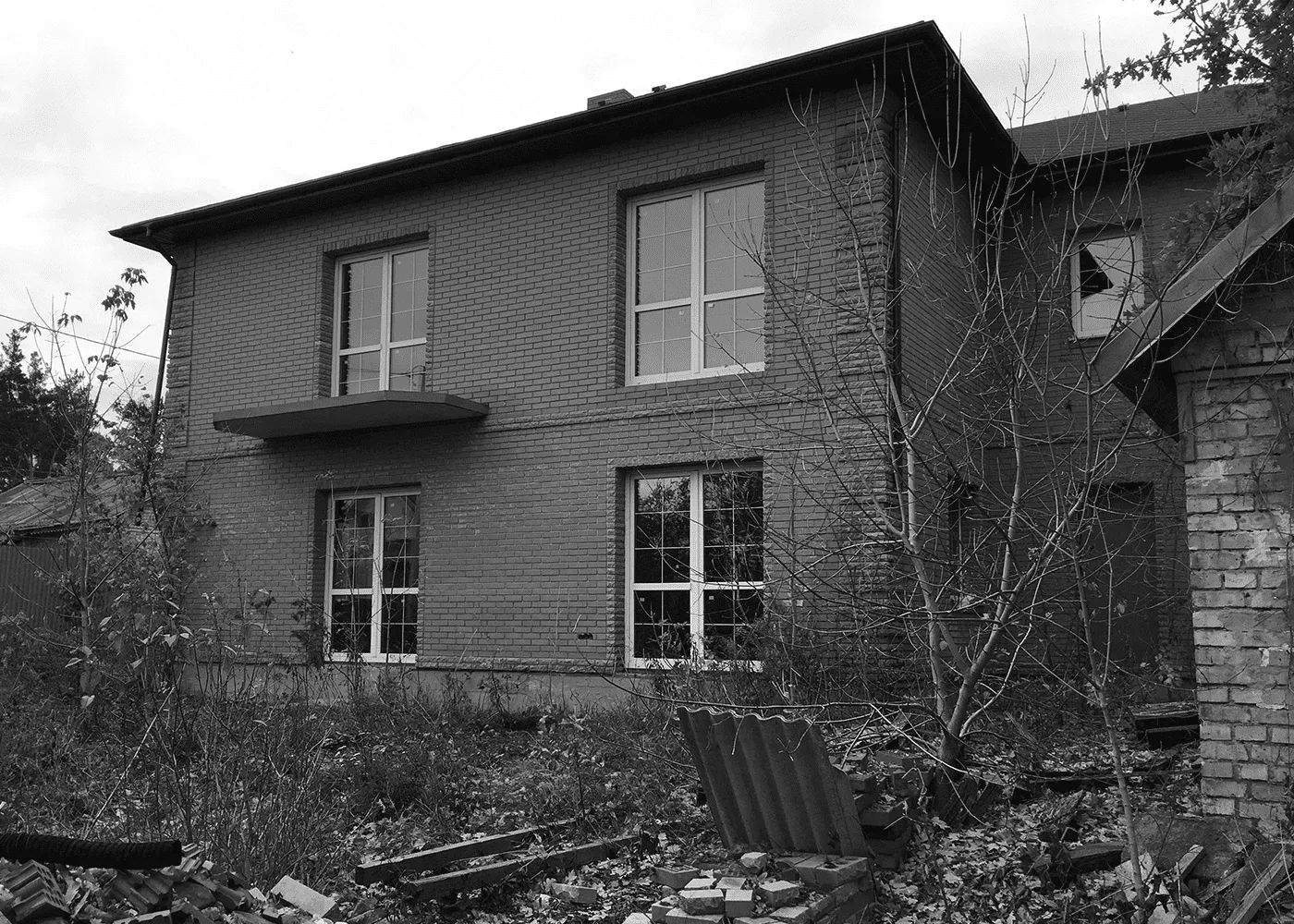
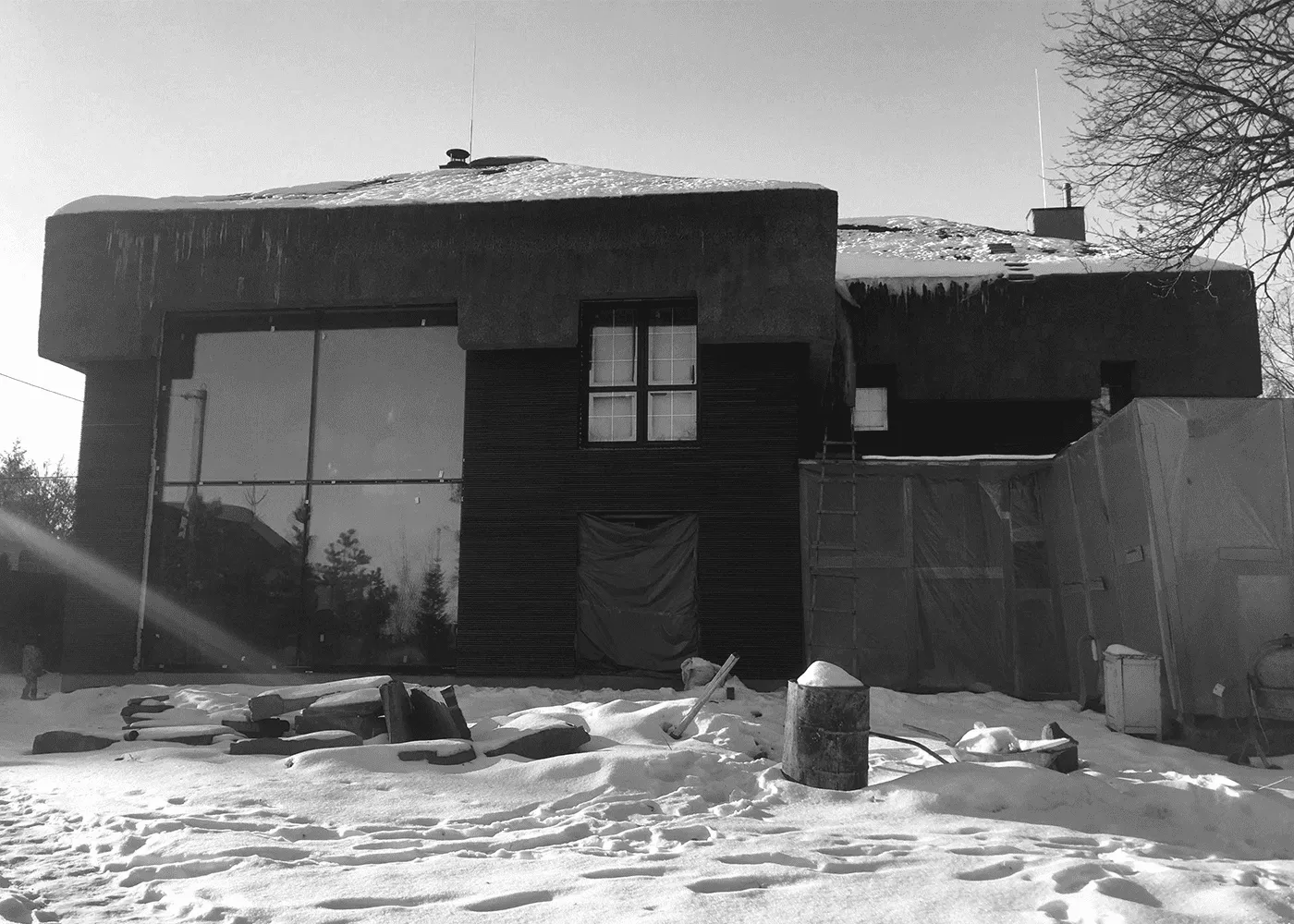
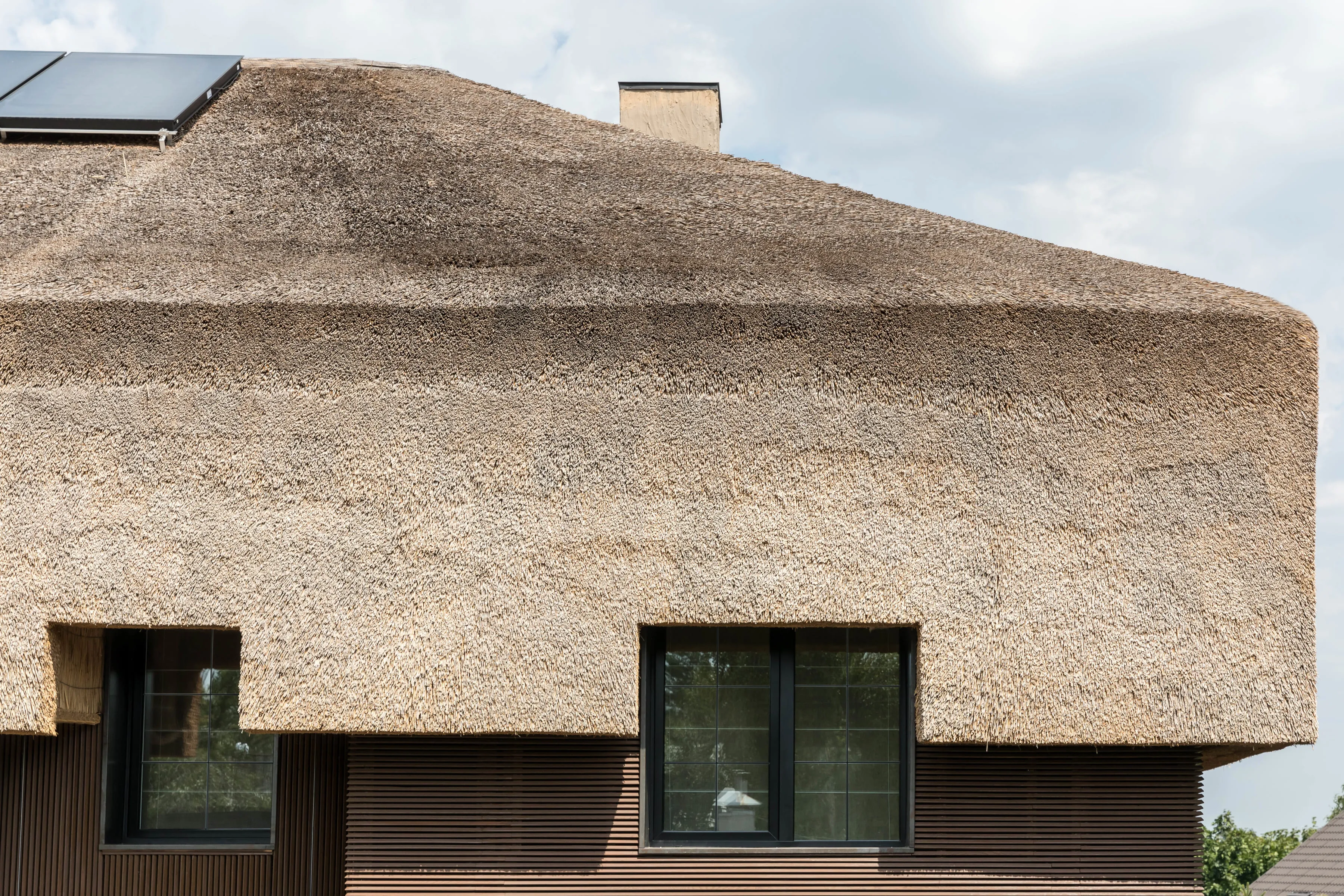
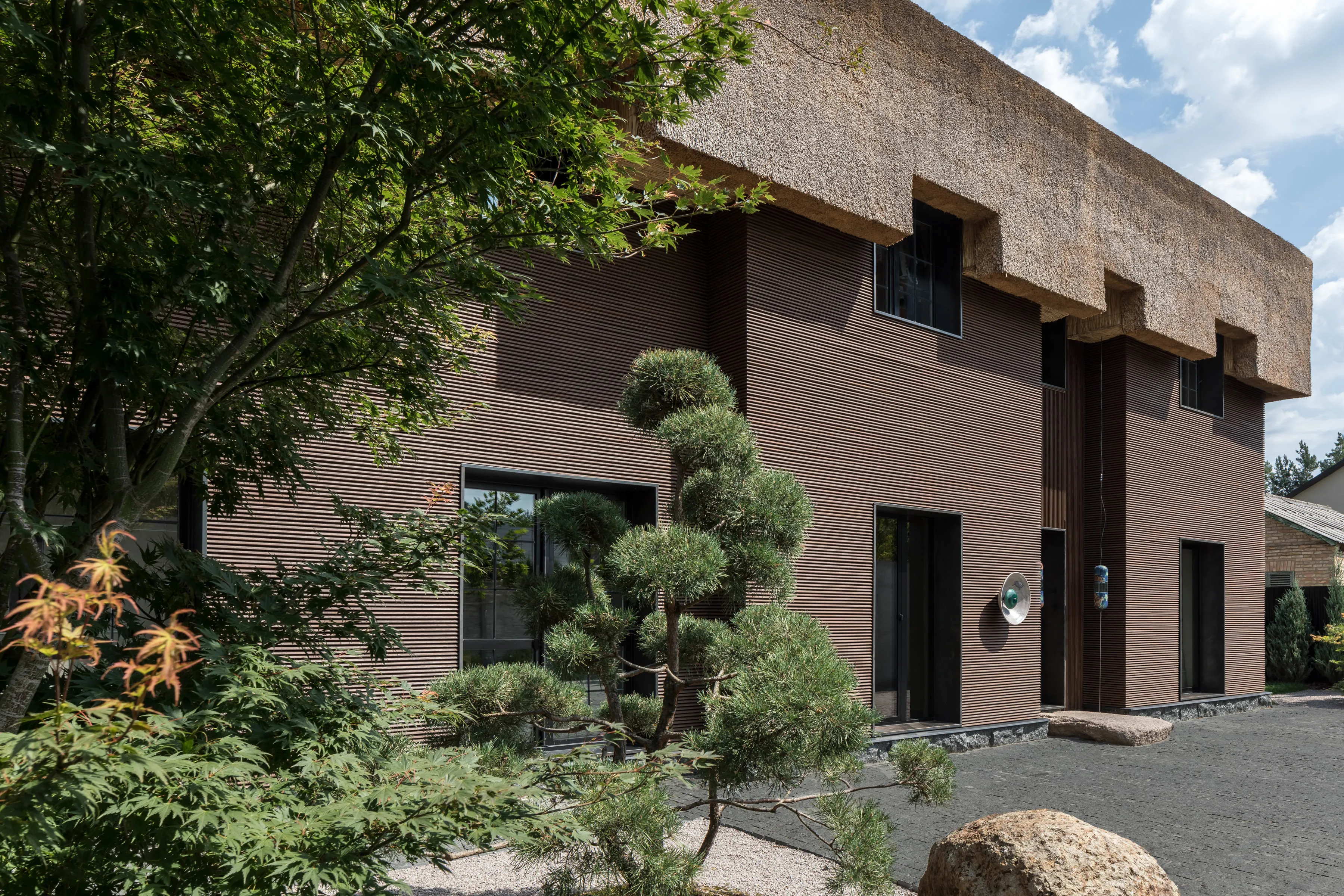
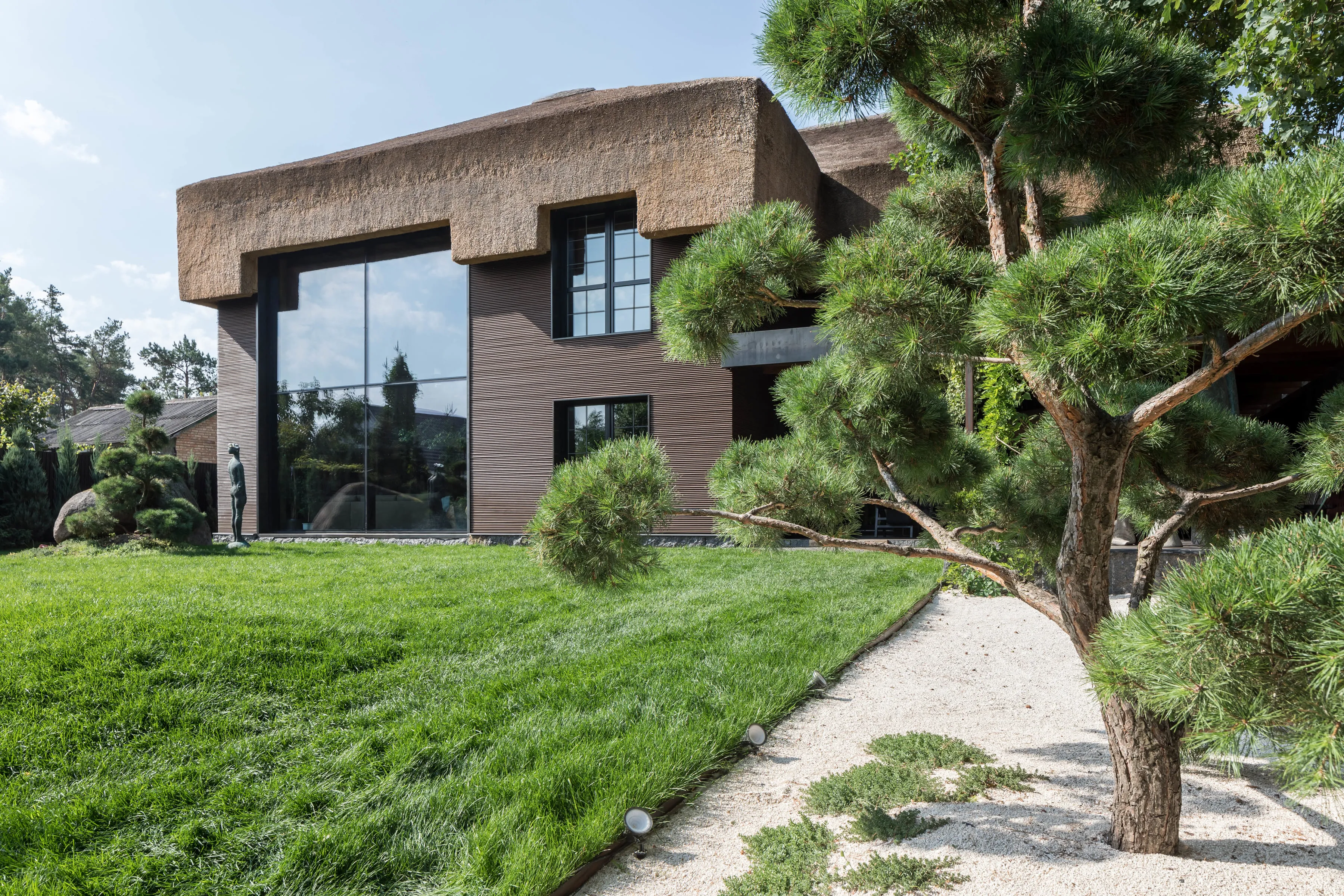
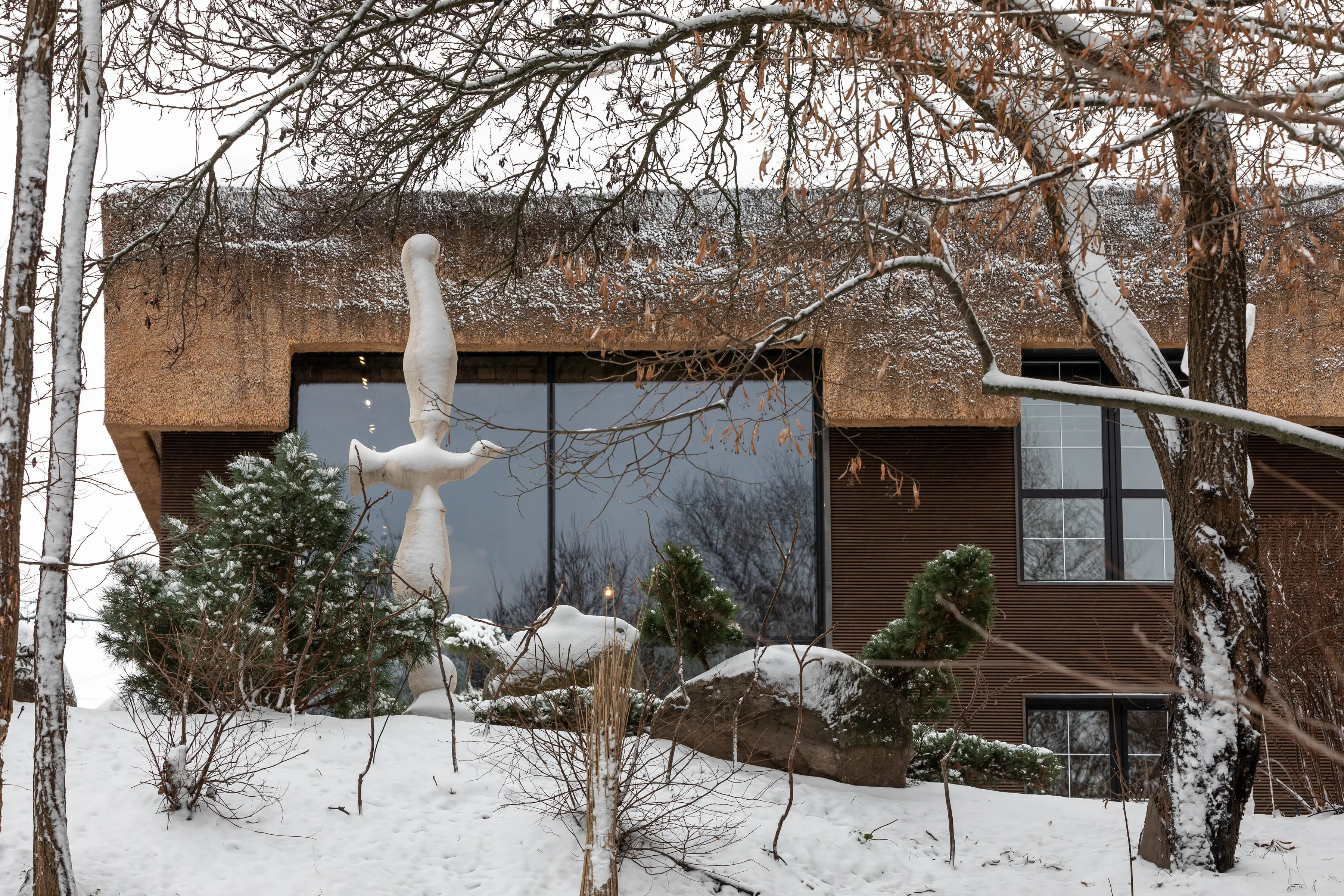
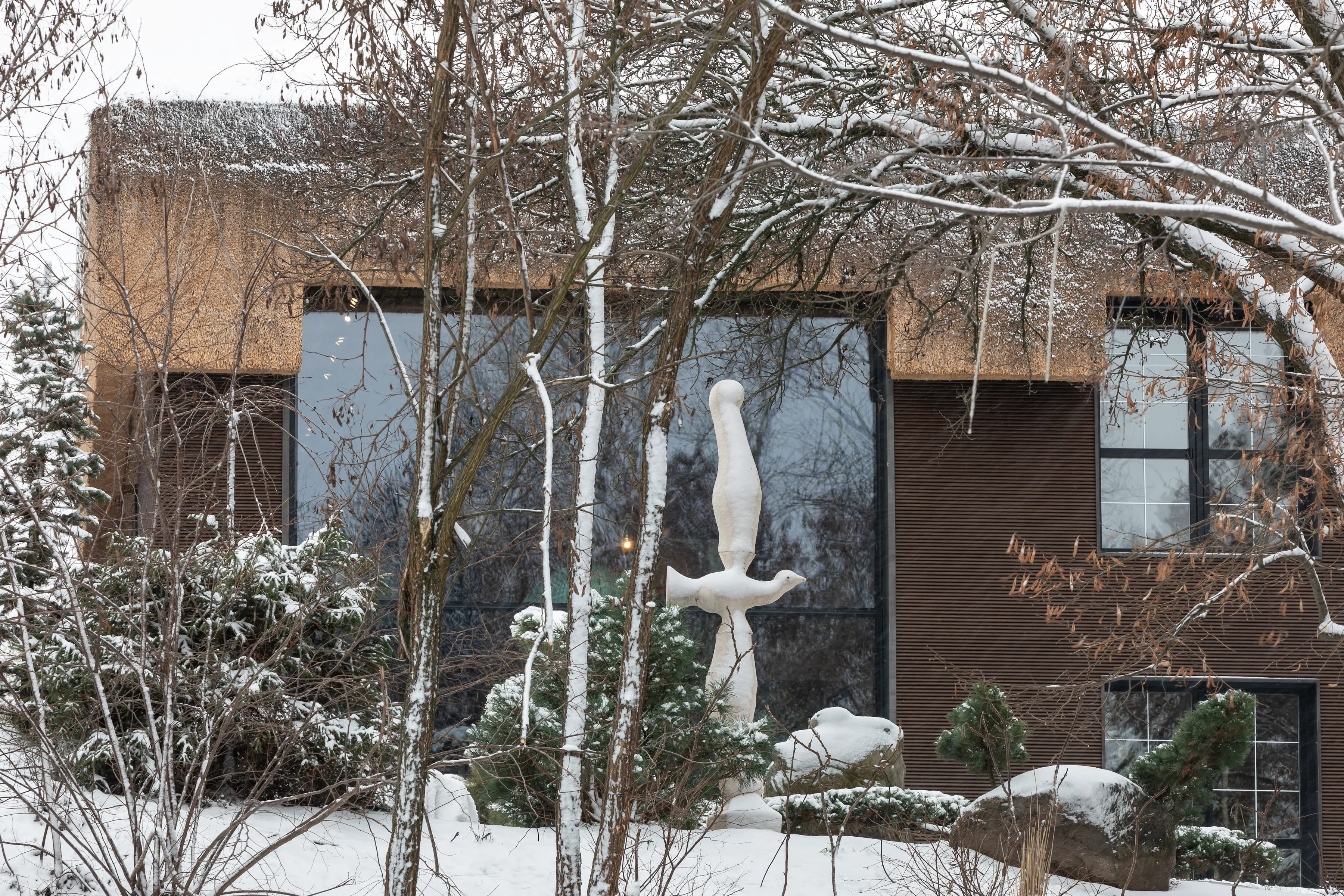
The house is built in contemporary Ukrainian style under the influence of the Japanese philosophy of wabi-sabi which finds beauty and harmony in imperfections. Being almost completely enclosed by a minimalist concrete fence, its character can be seen with half an eye — a proud thatched roof hangs over the wooden rails on the walls.
These materials are traditional for both Ukrainian and Japanese cultures.
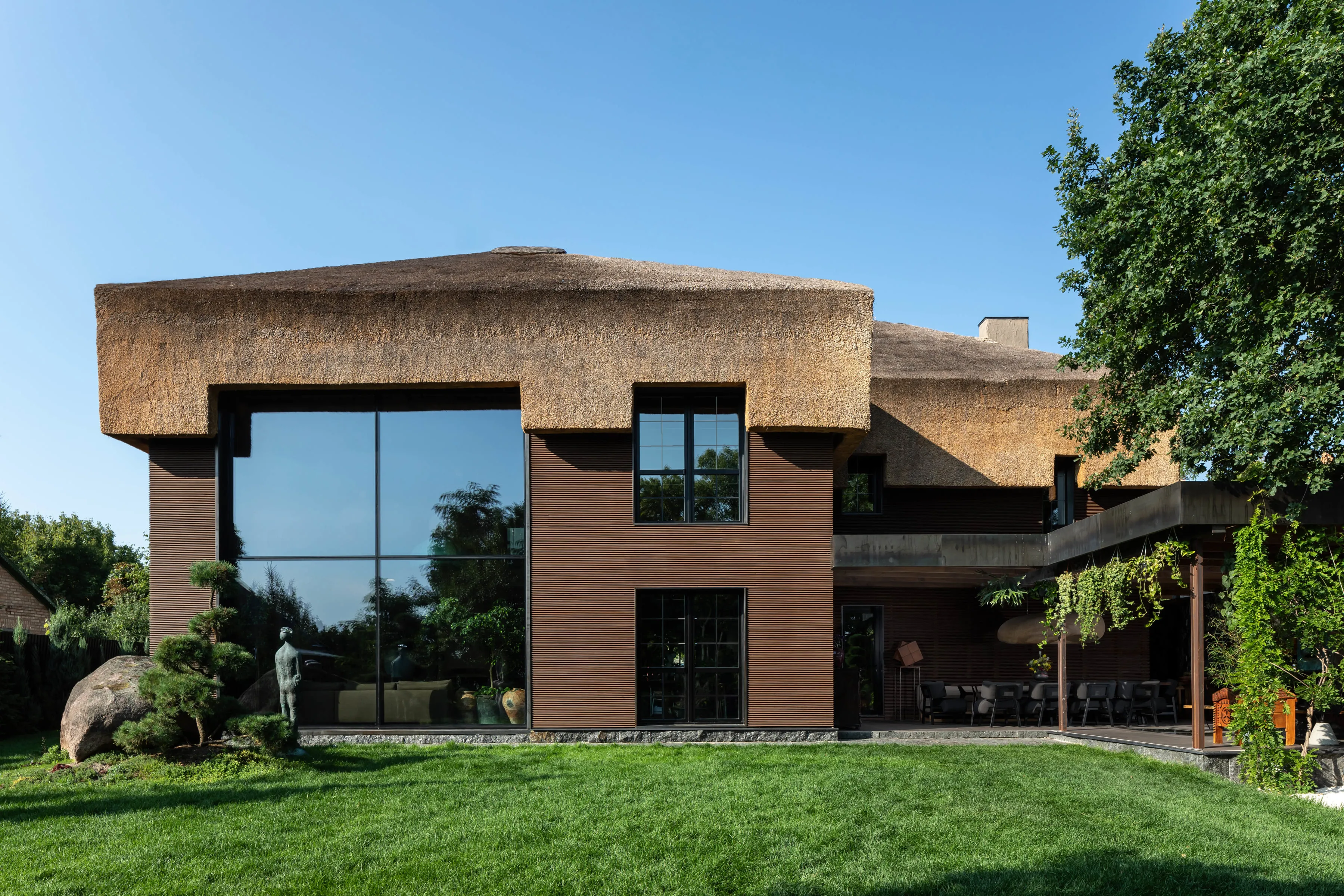
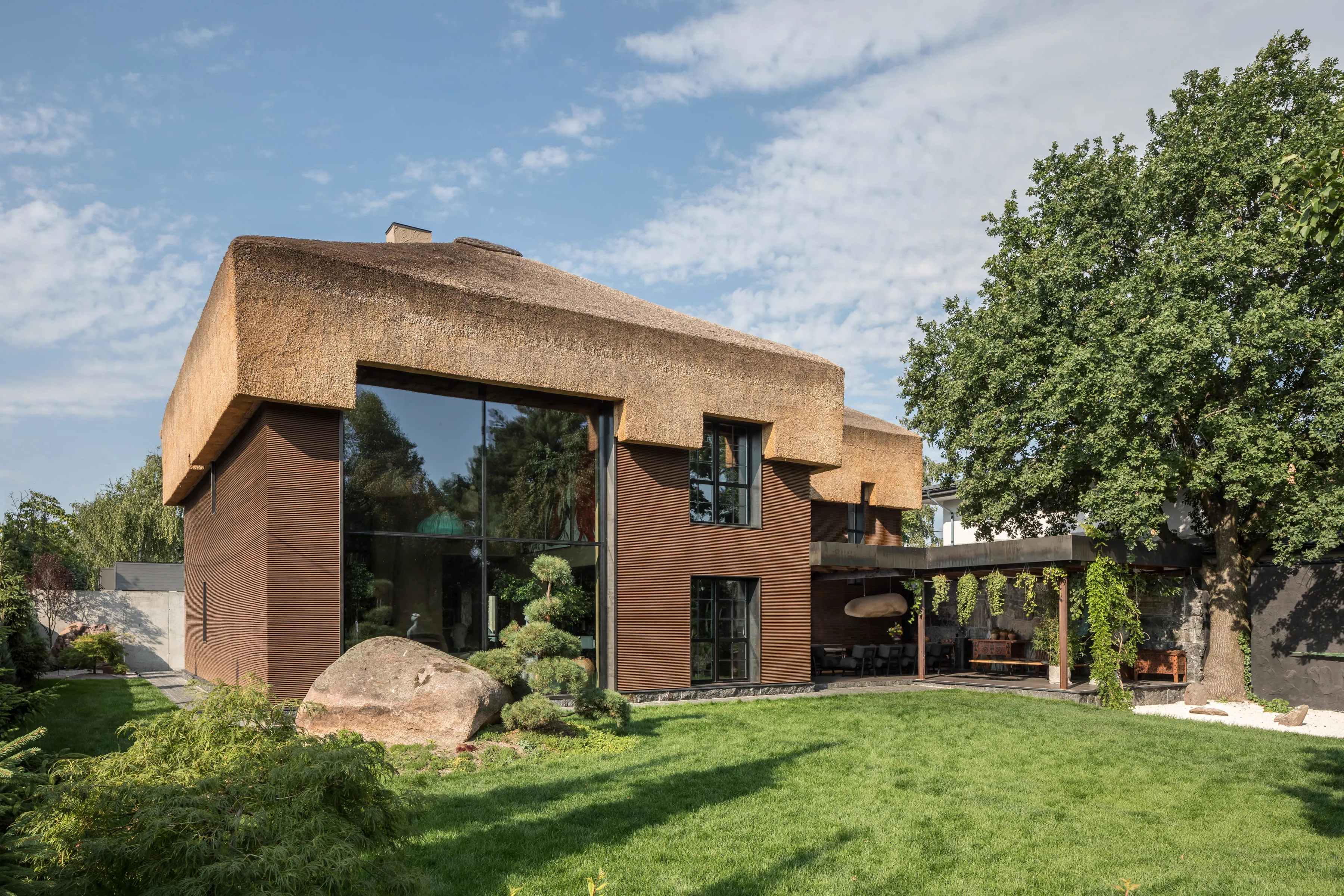
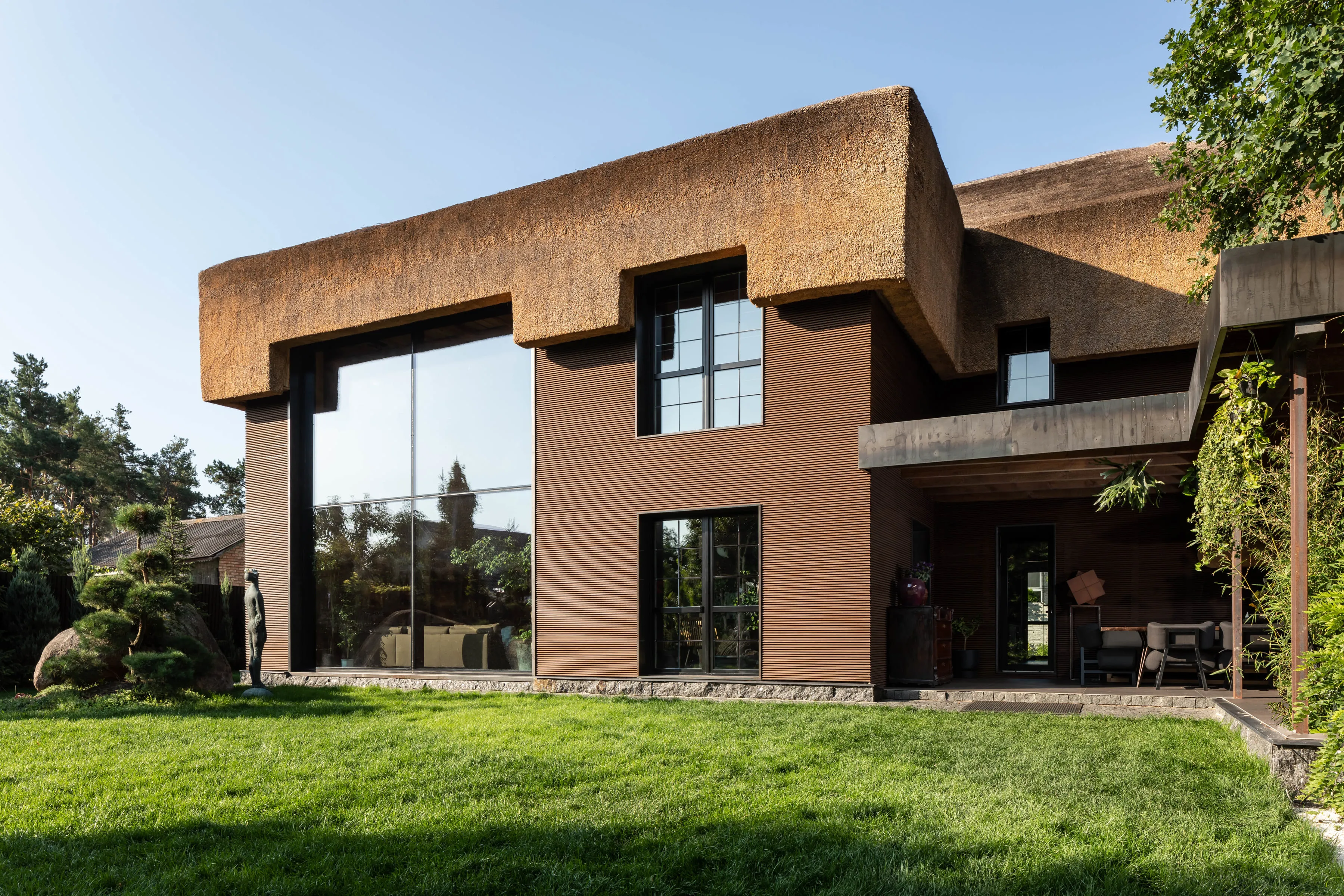
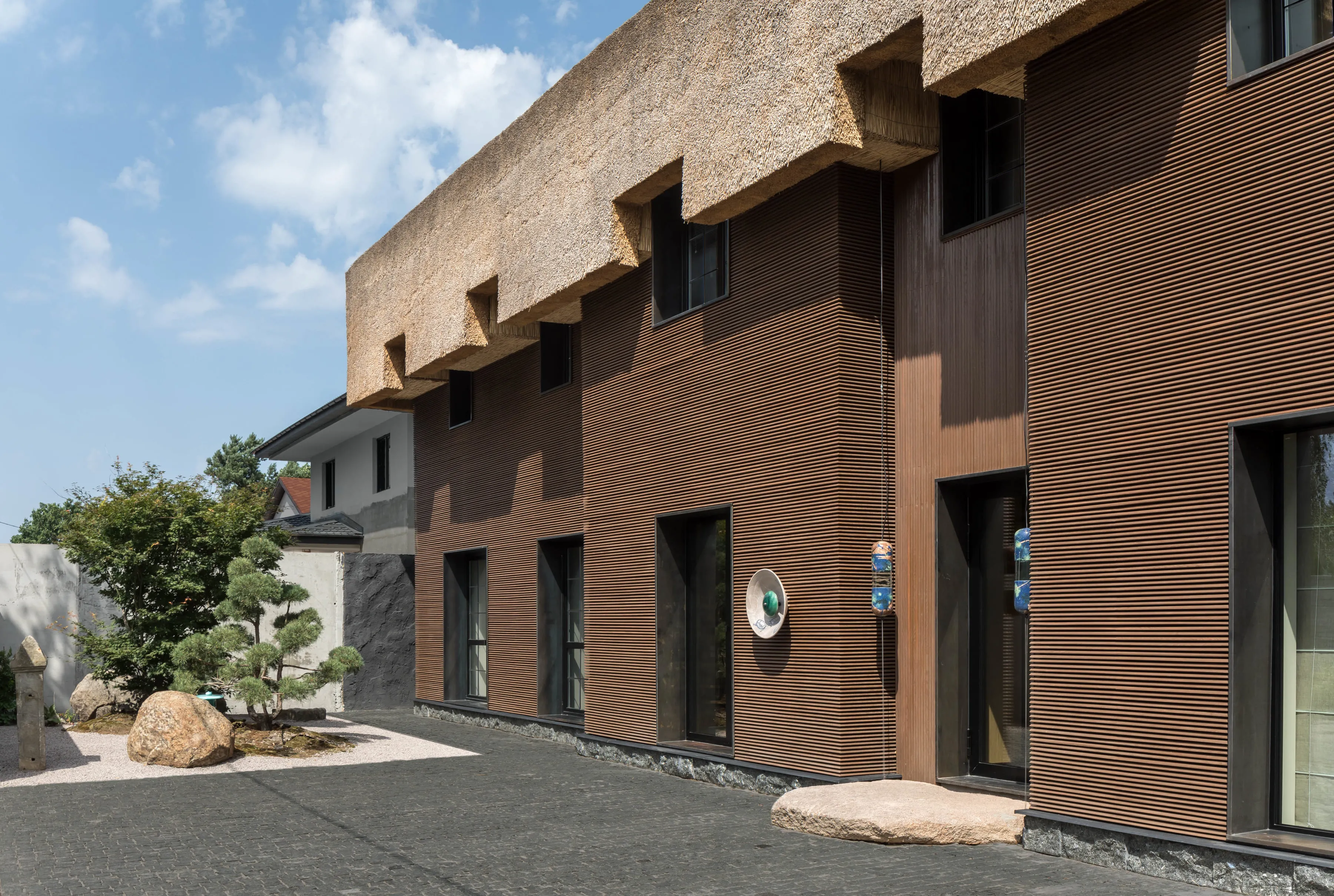
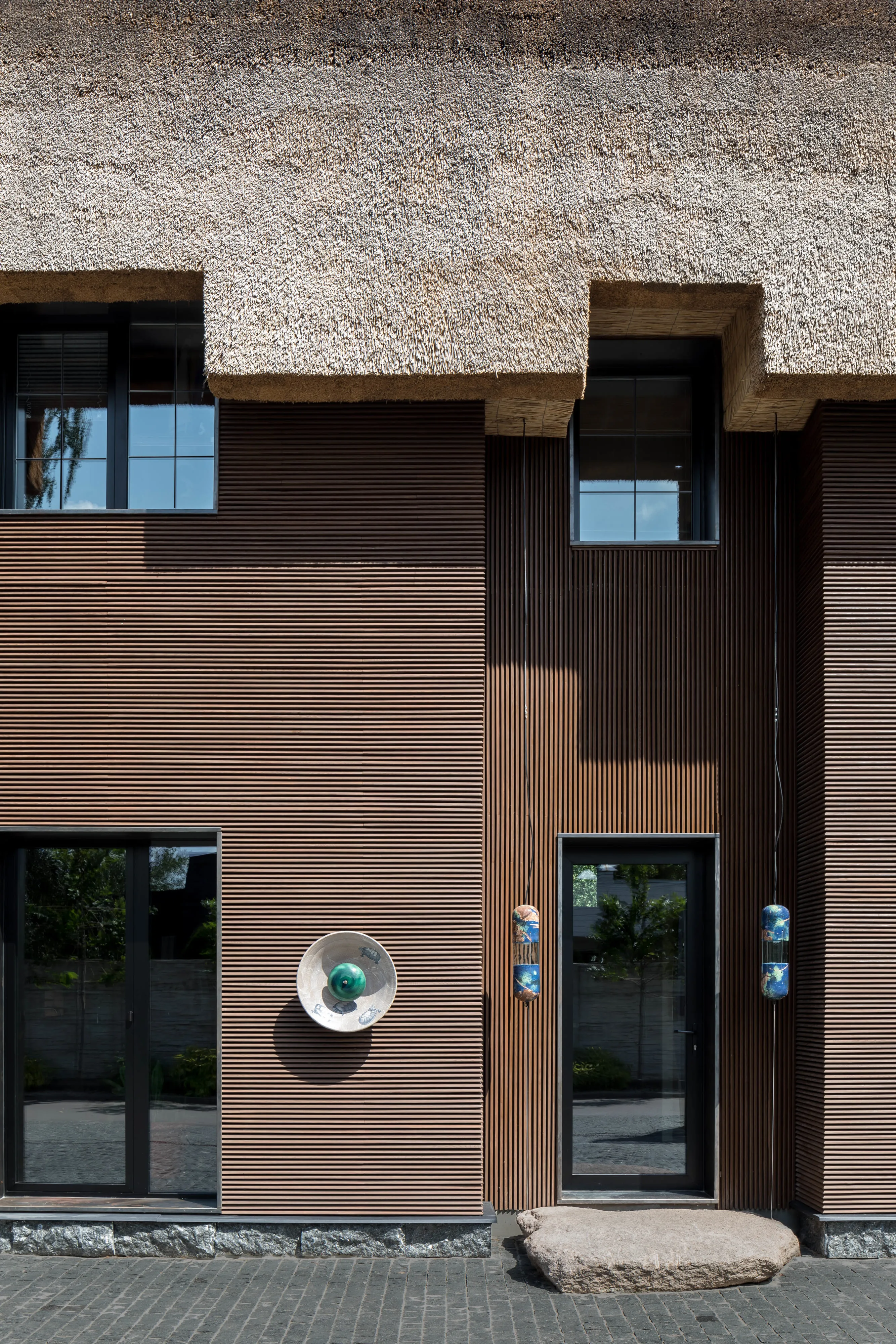
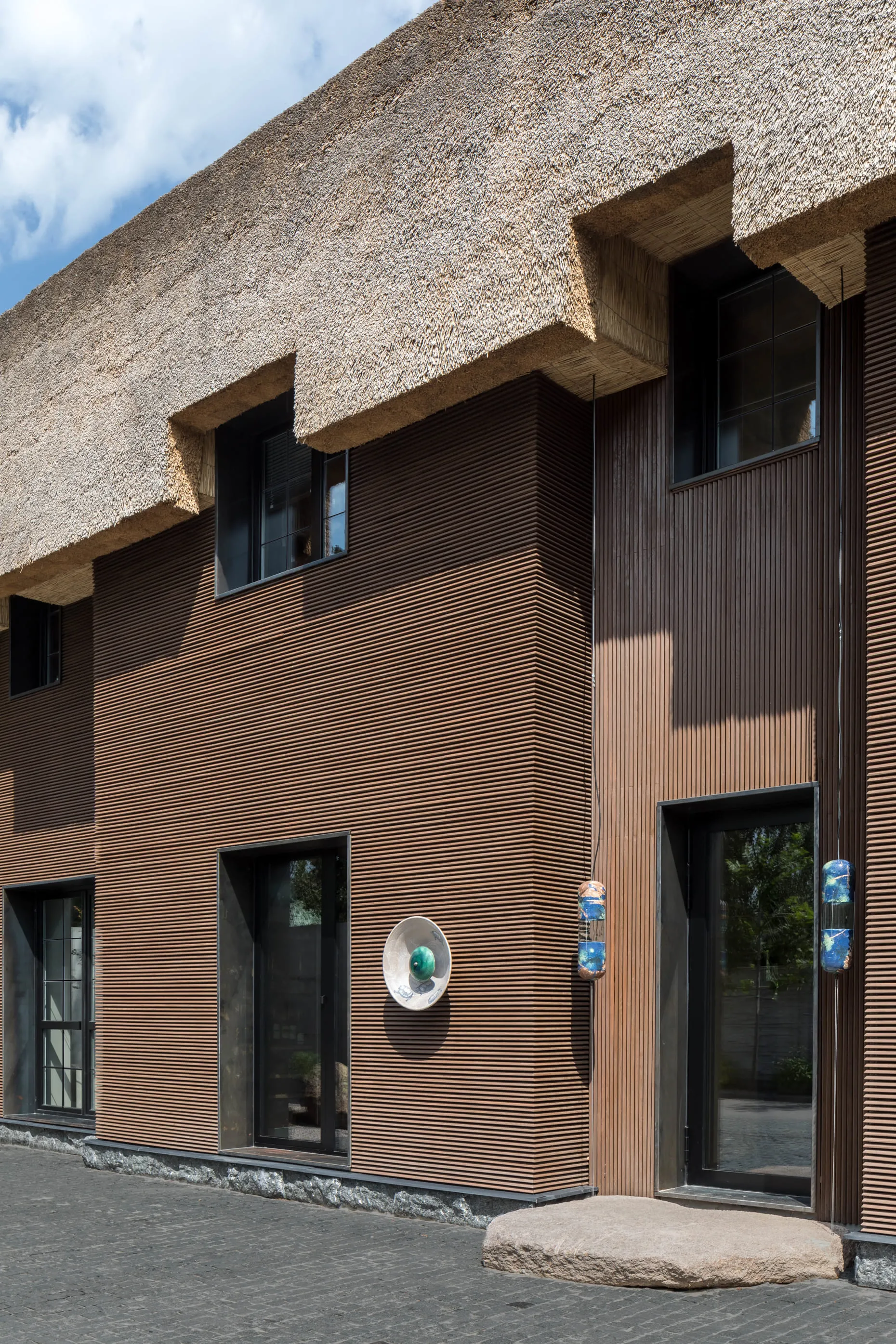
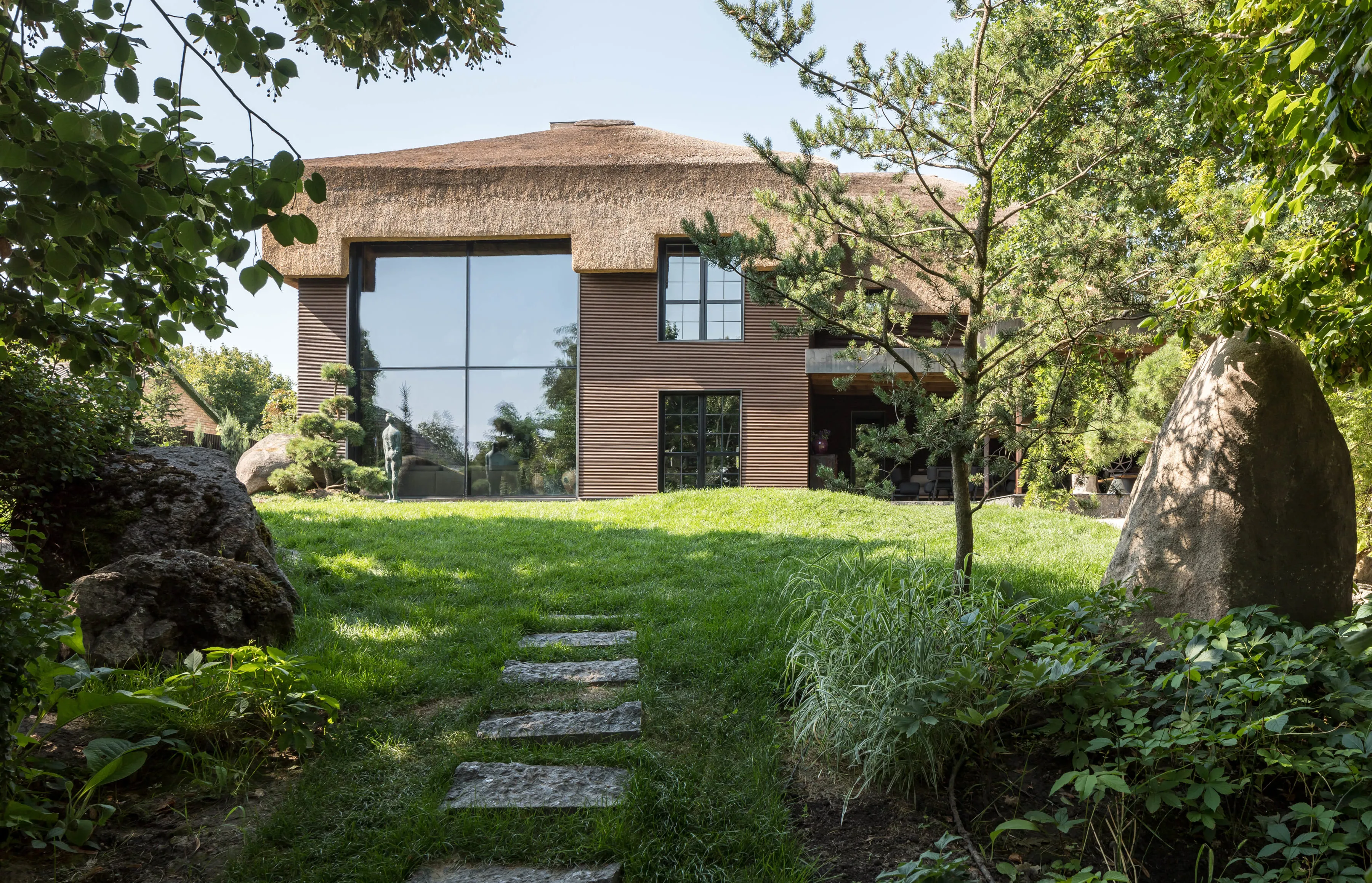
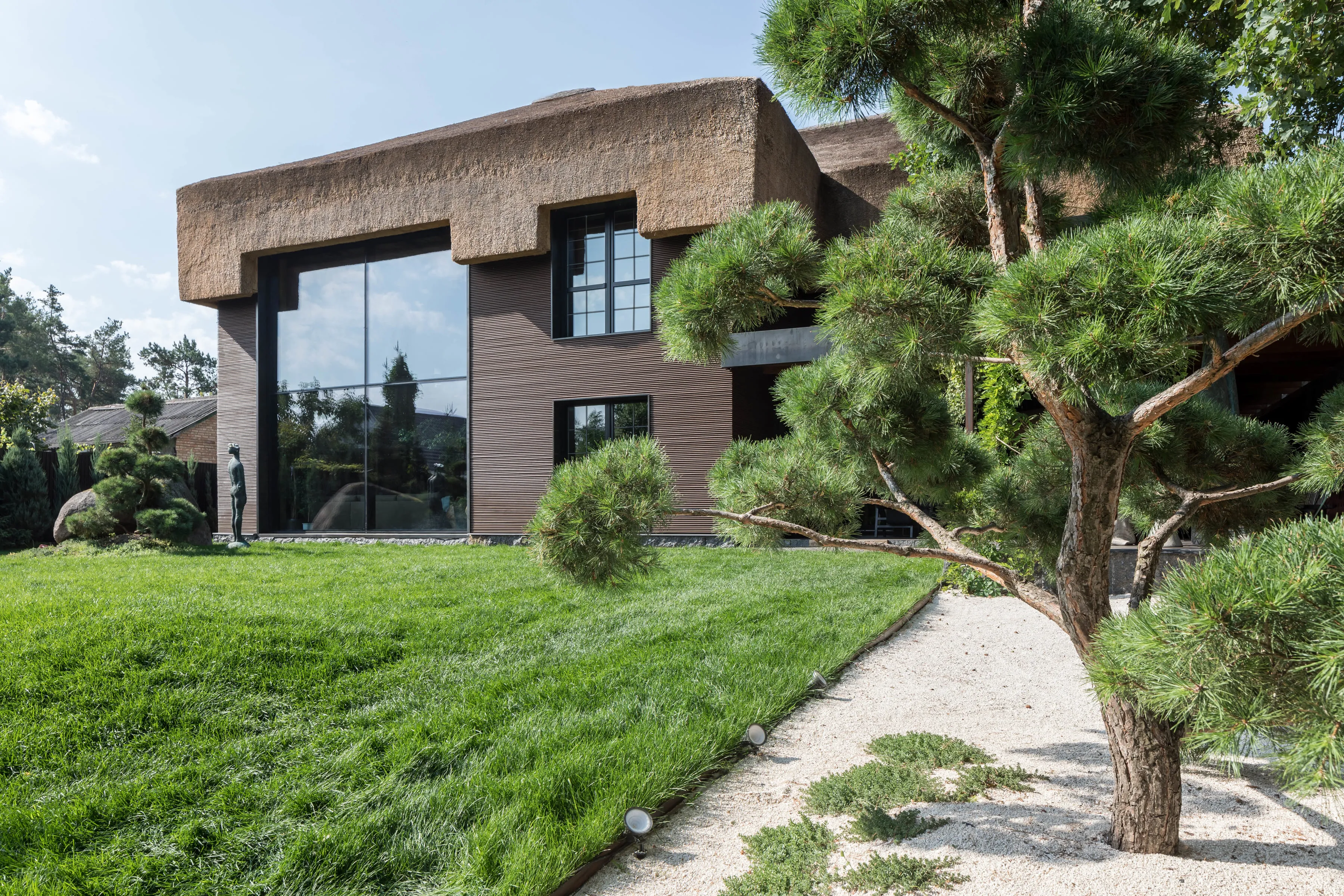
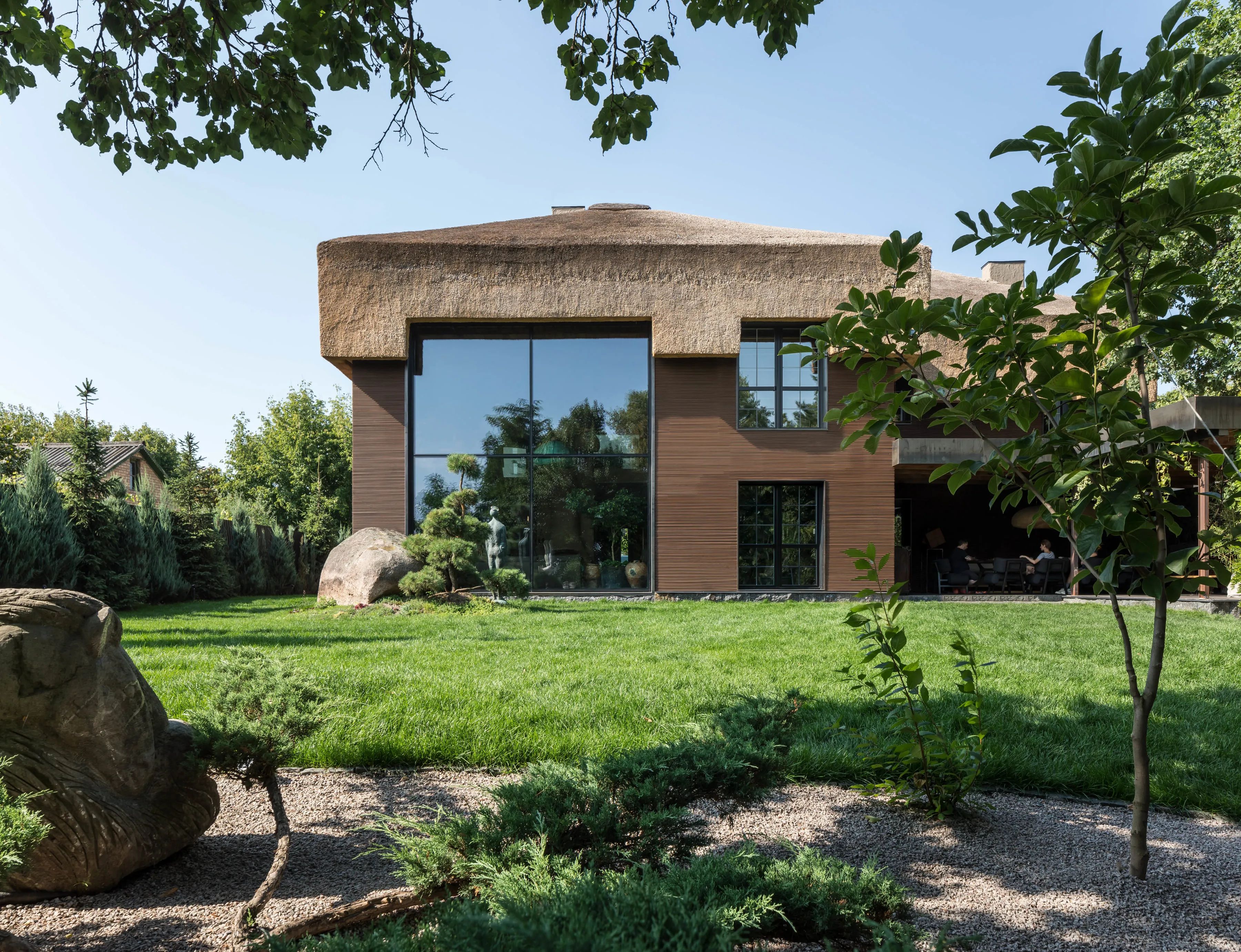
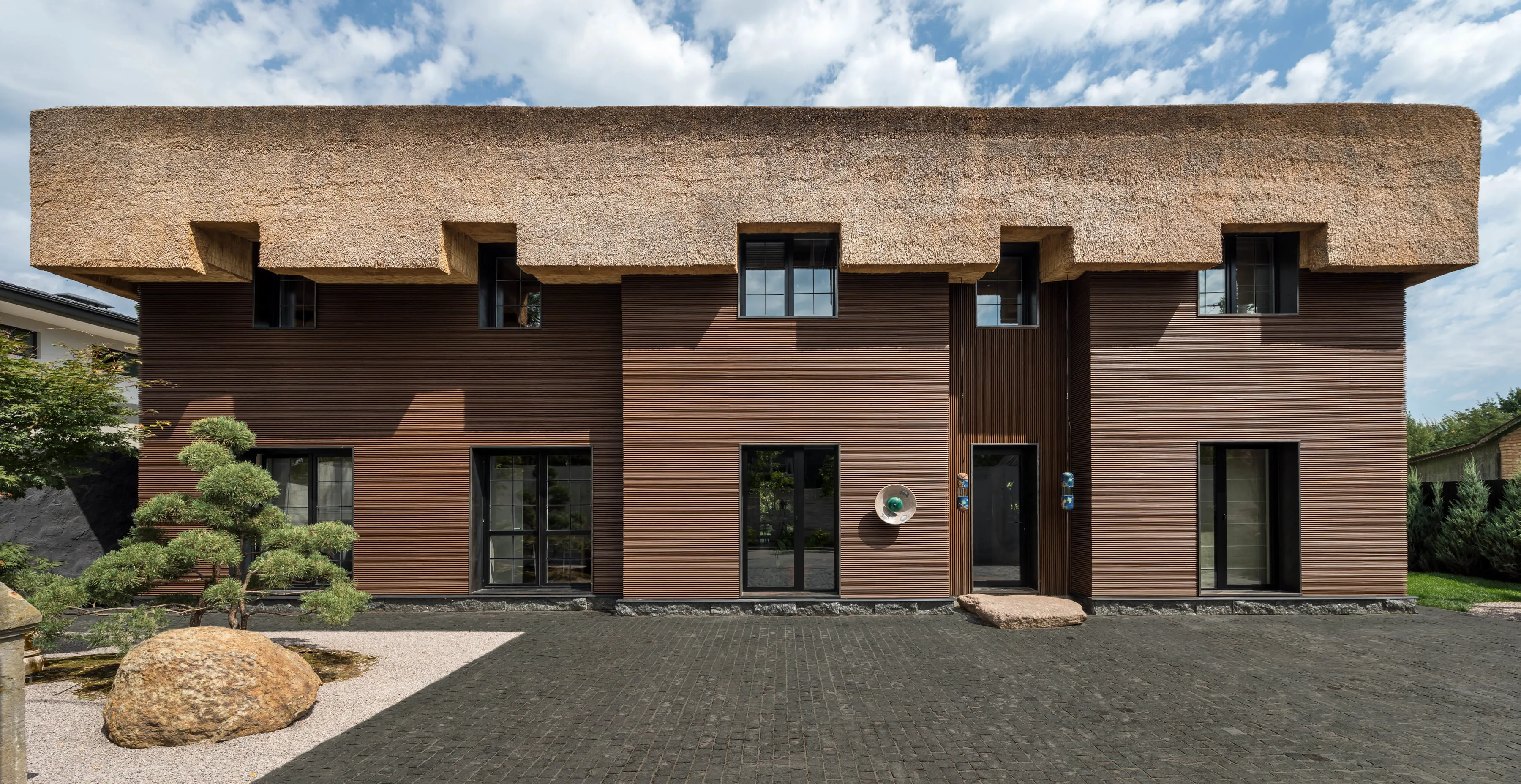
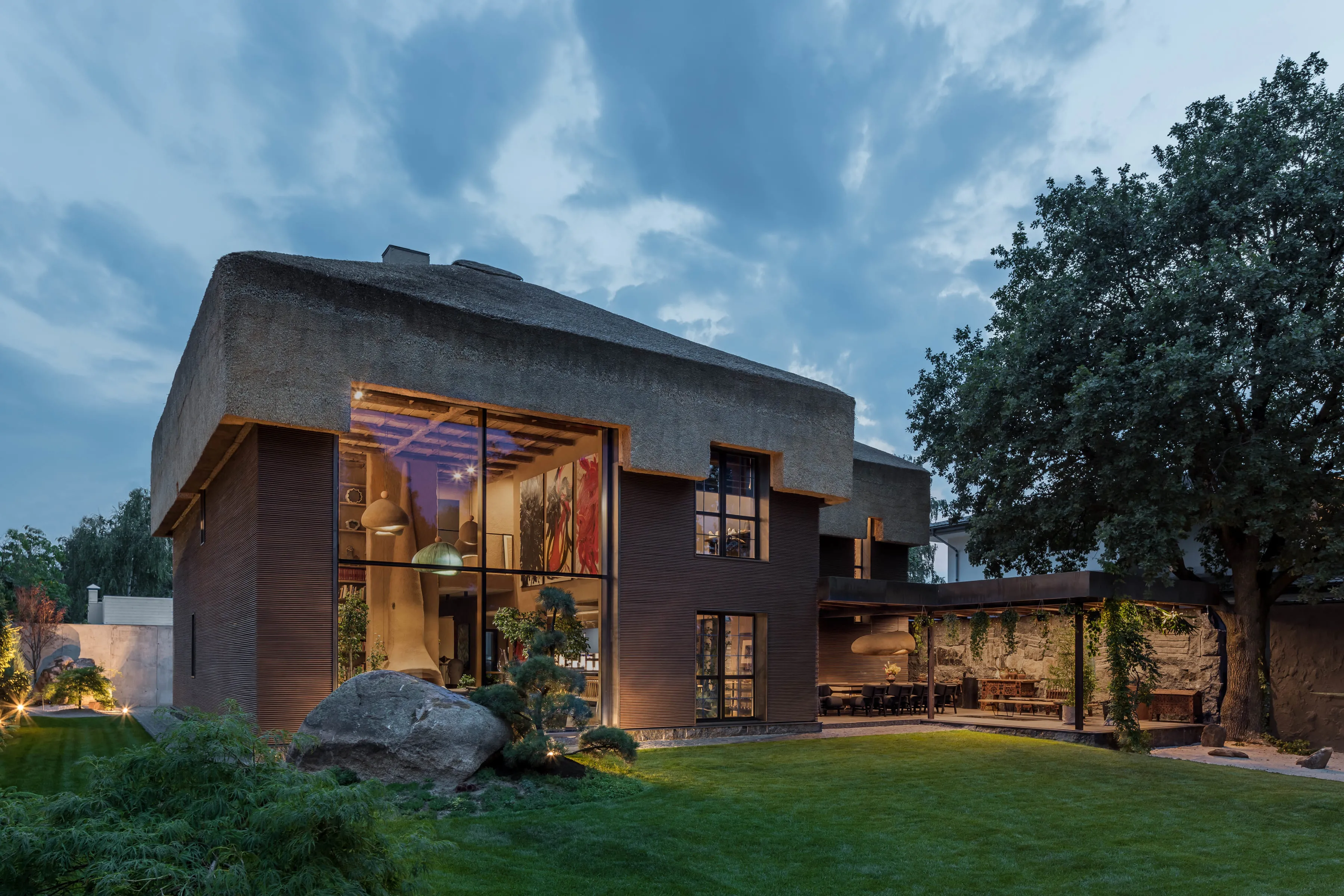
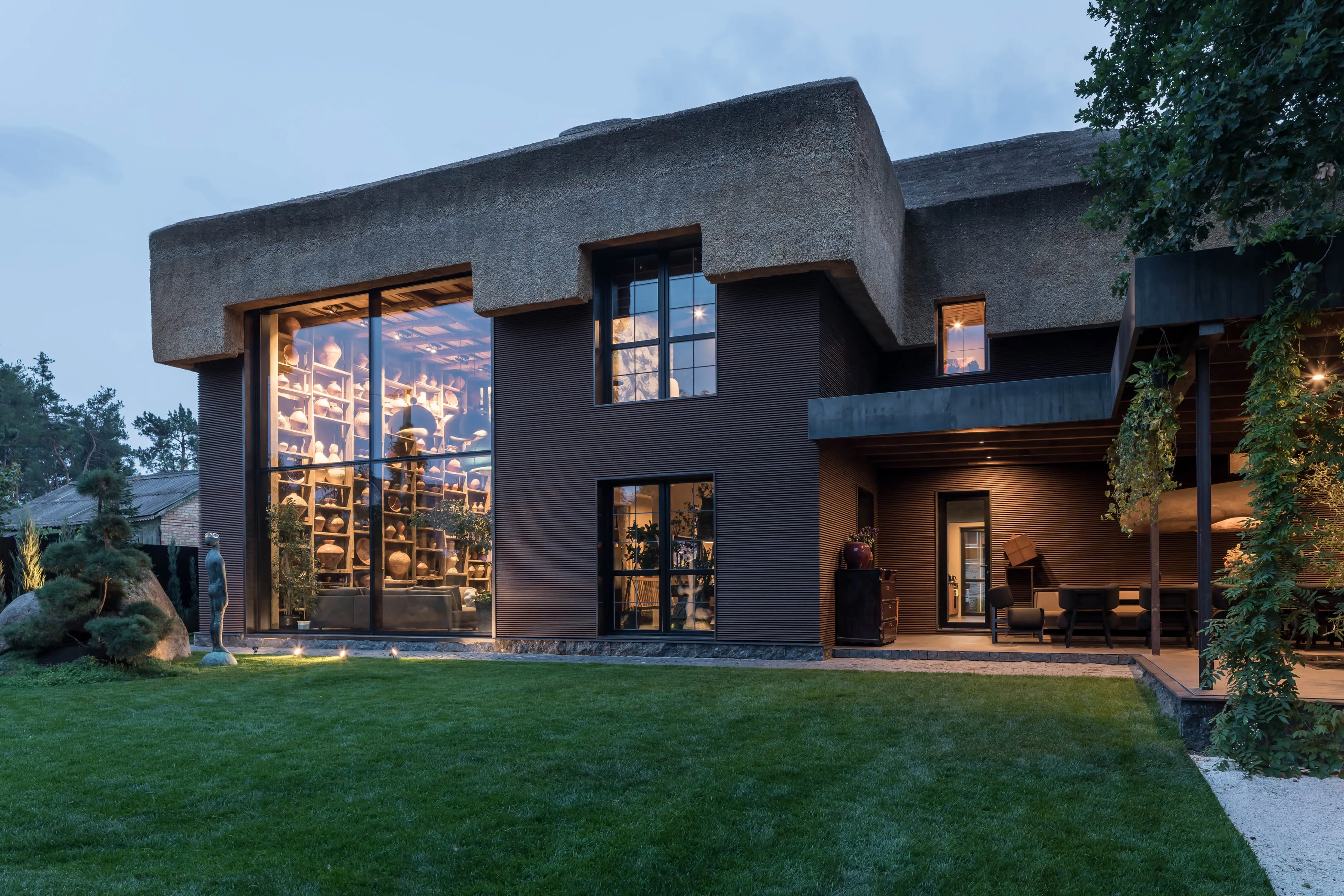
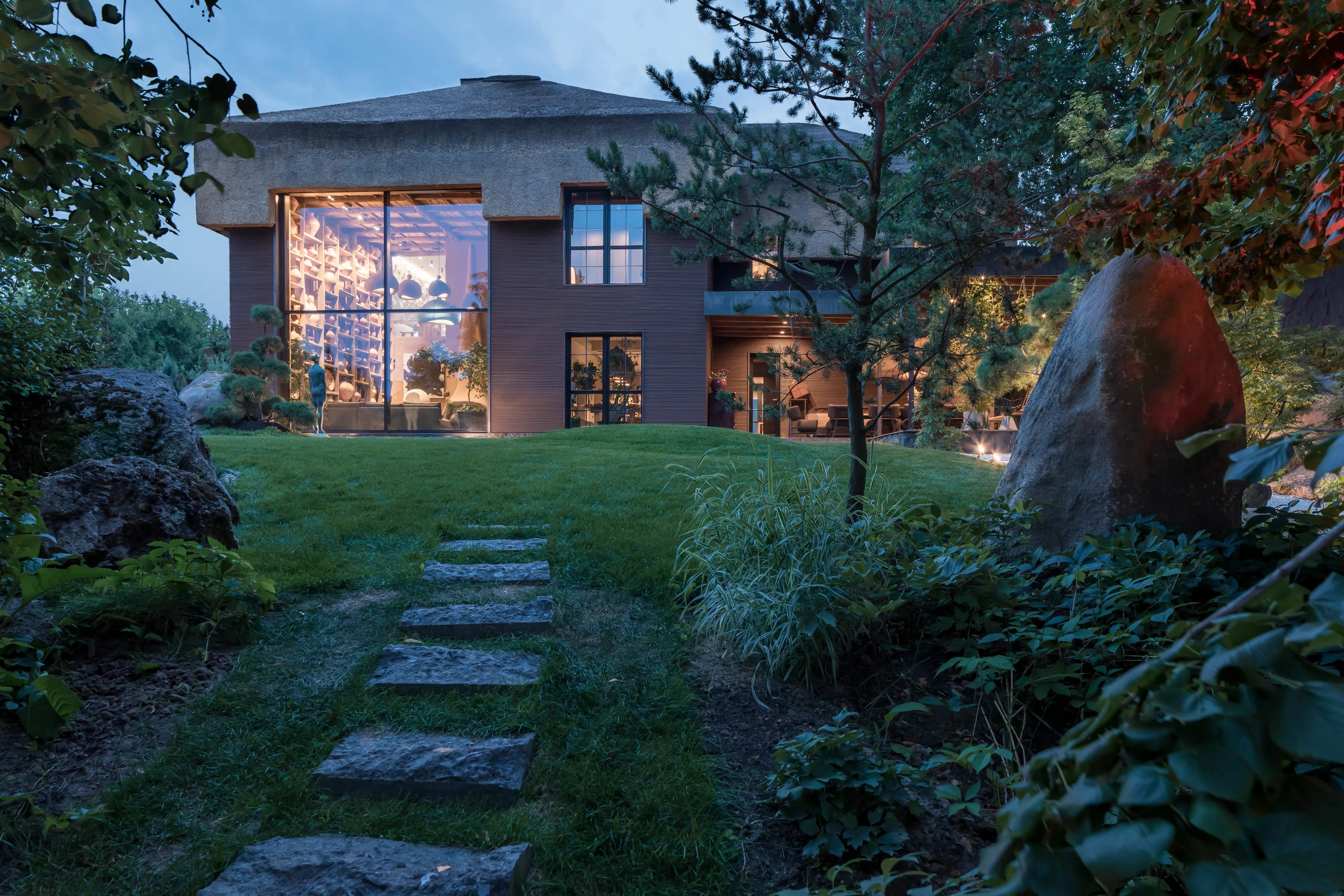
This house was built by the Ukrainian architect Serhii Makhno for his family.
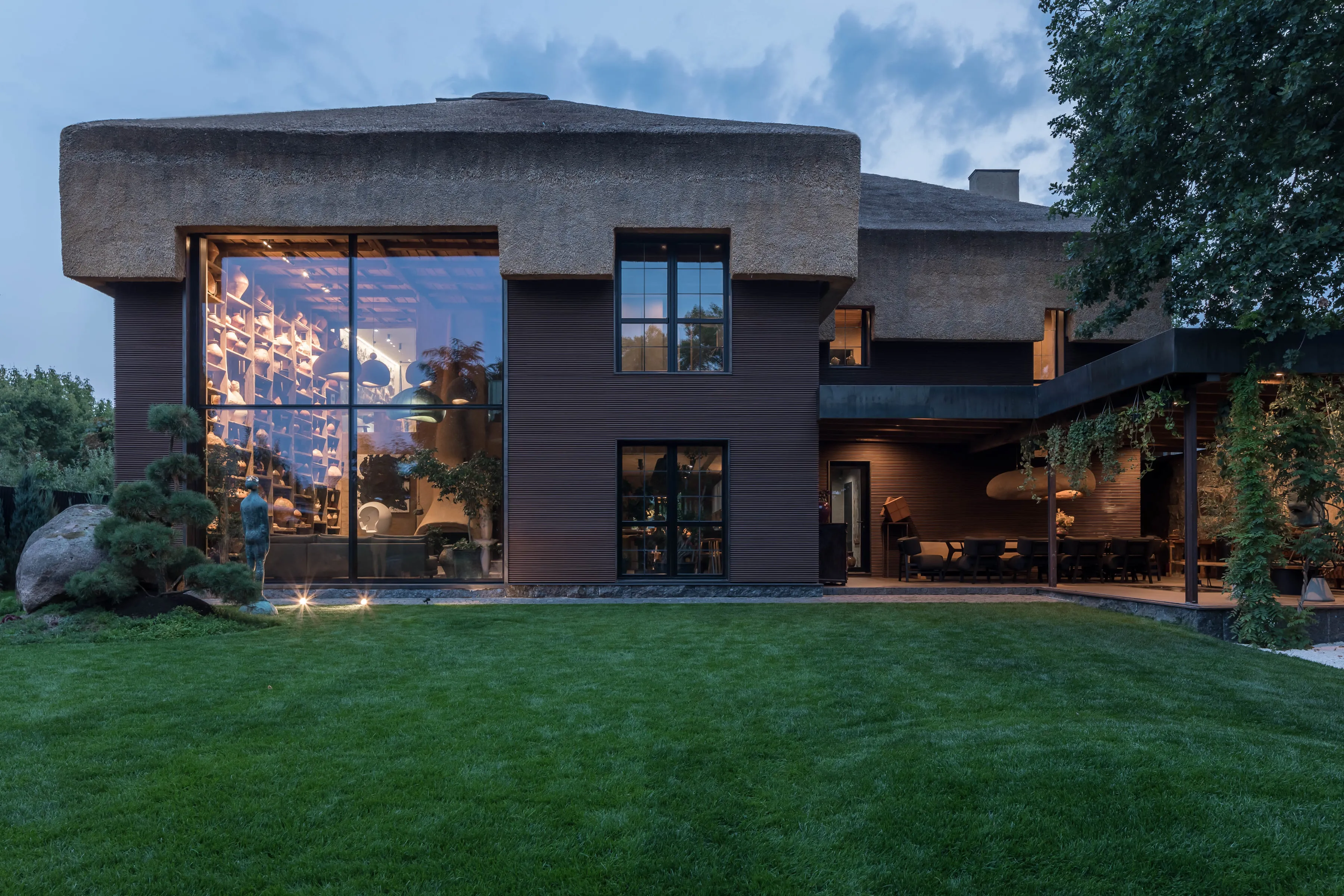
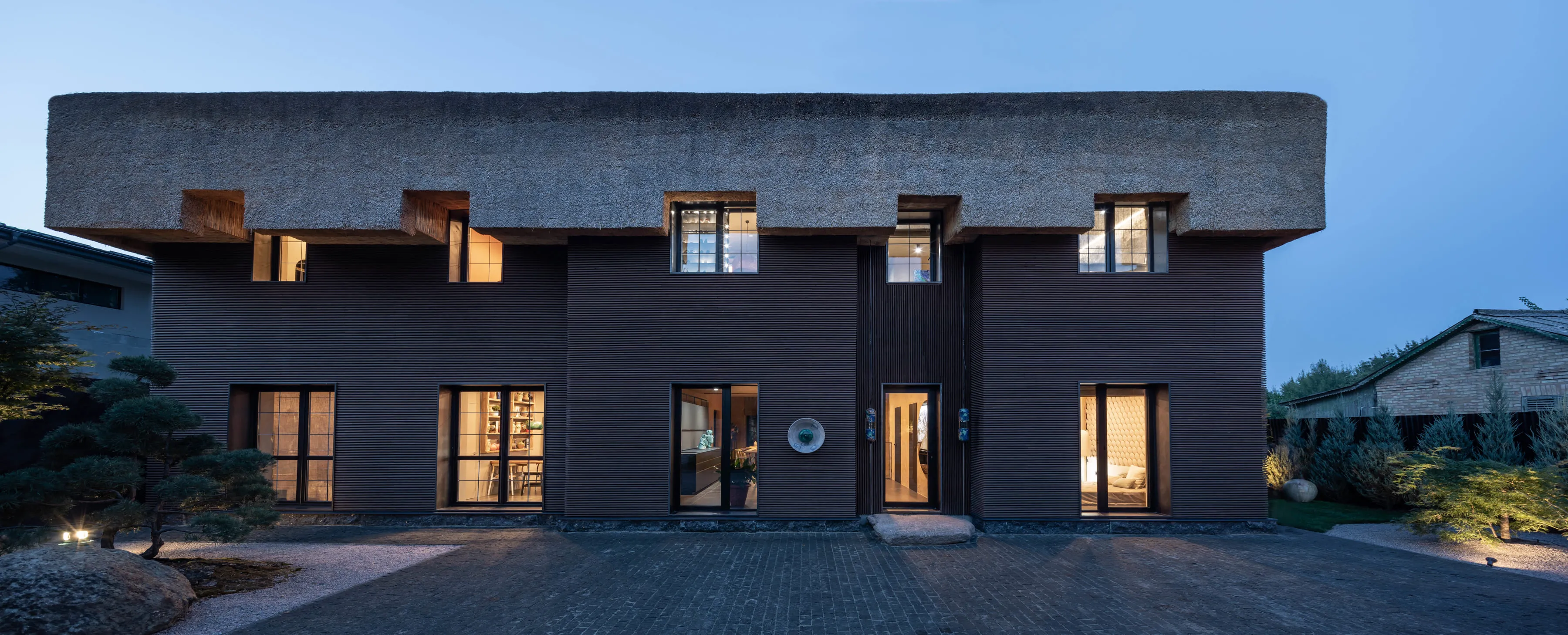
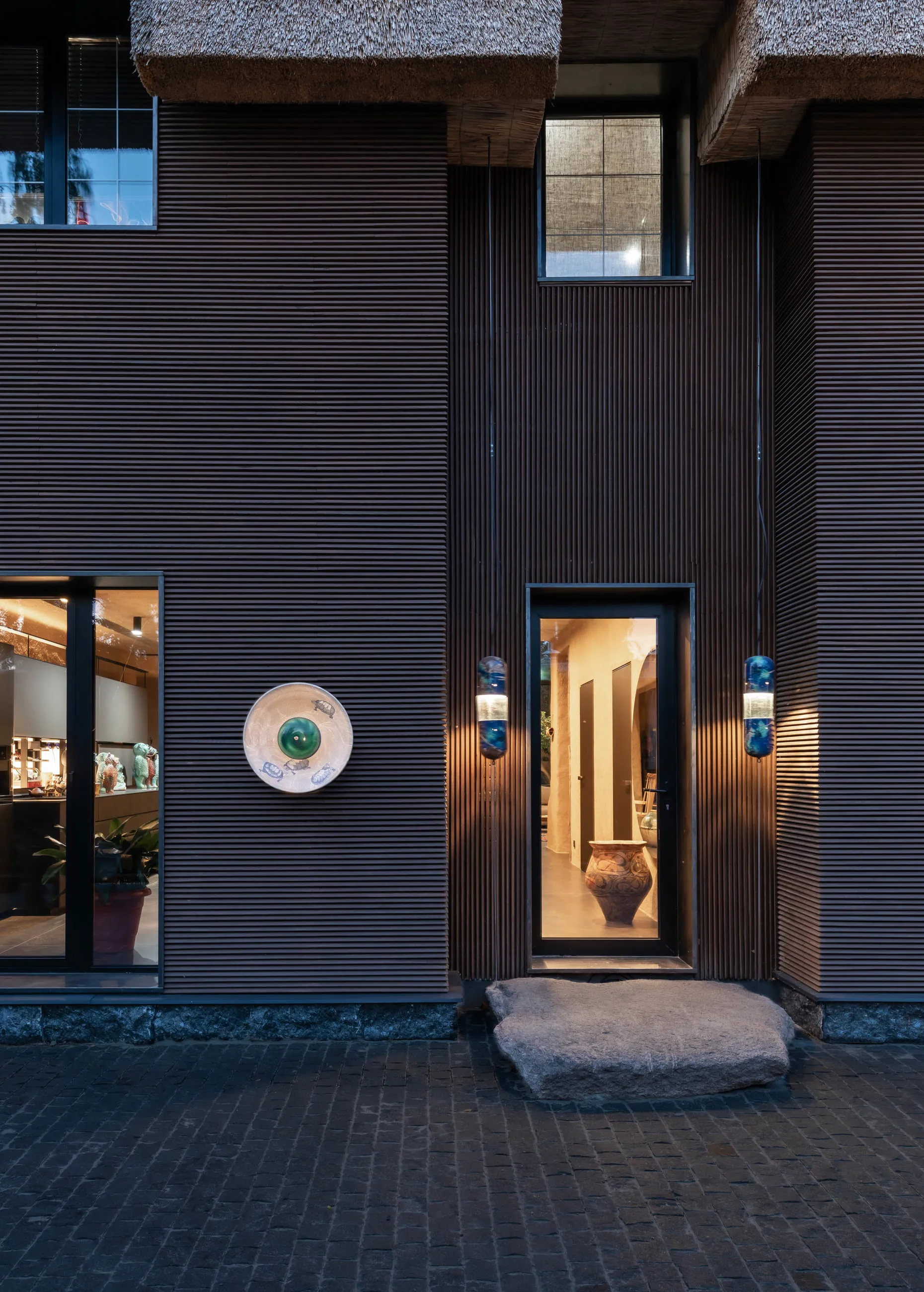
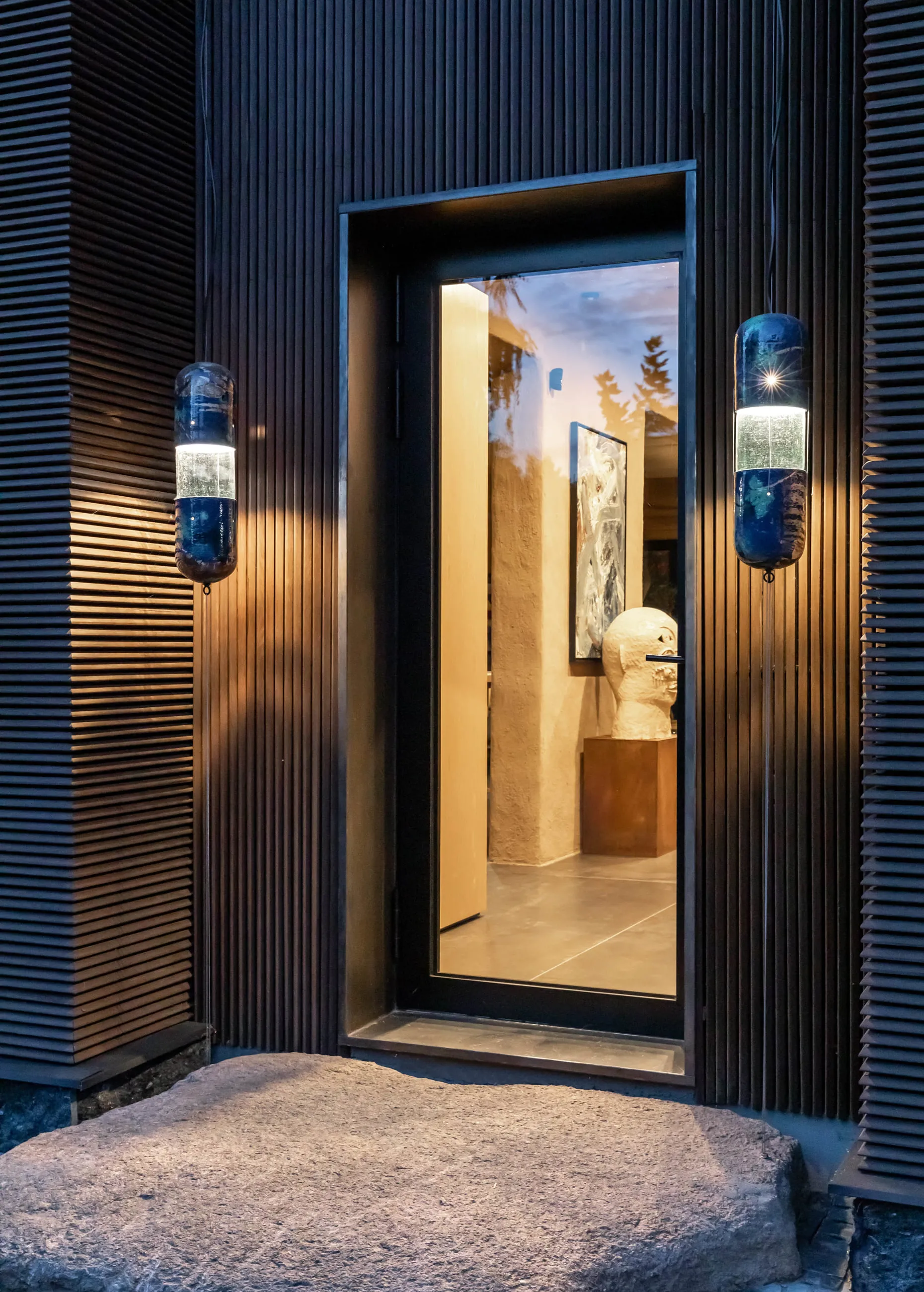
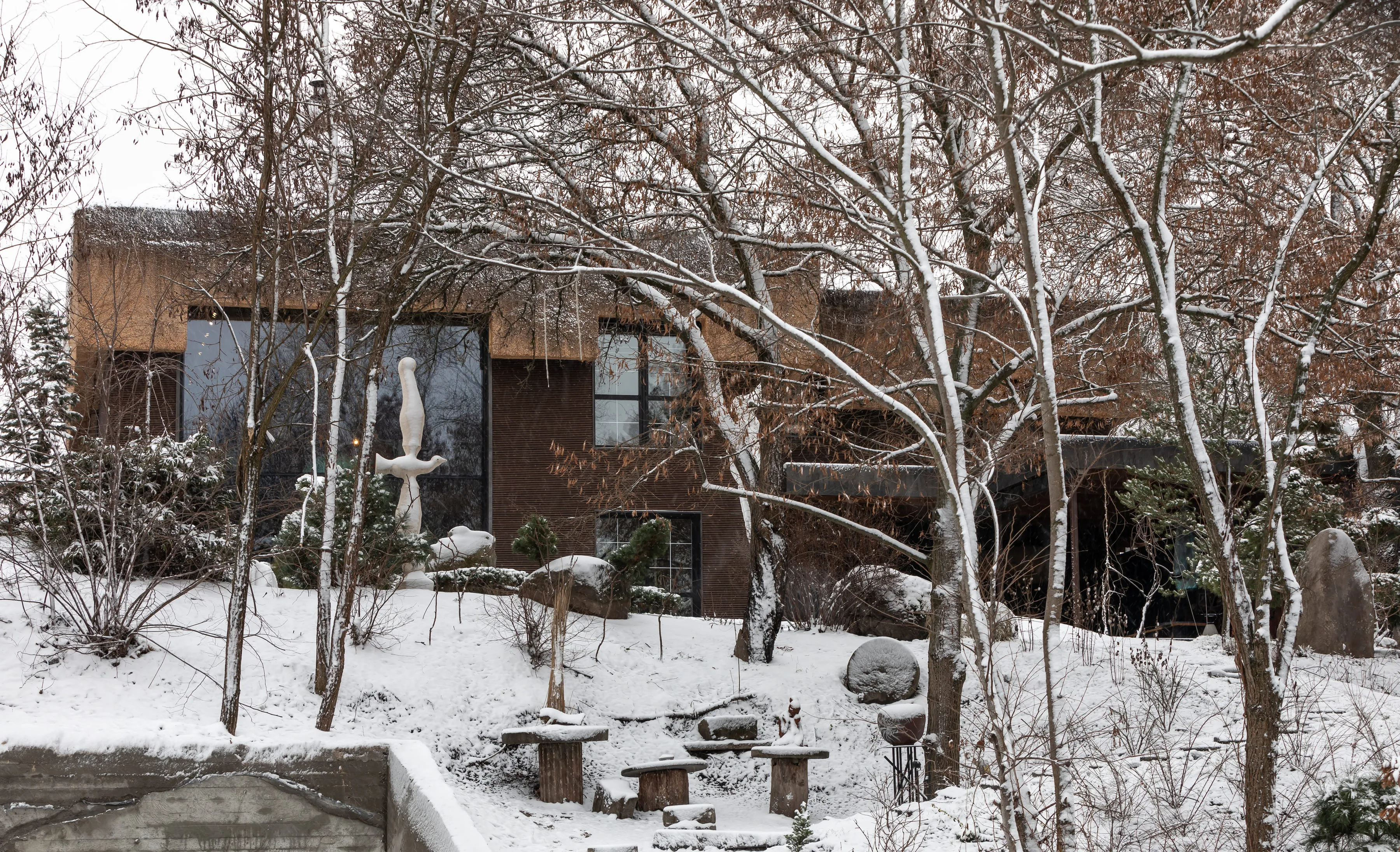
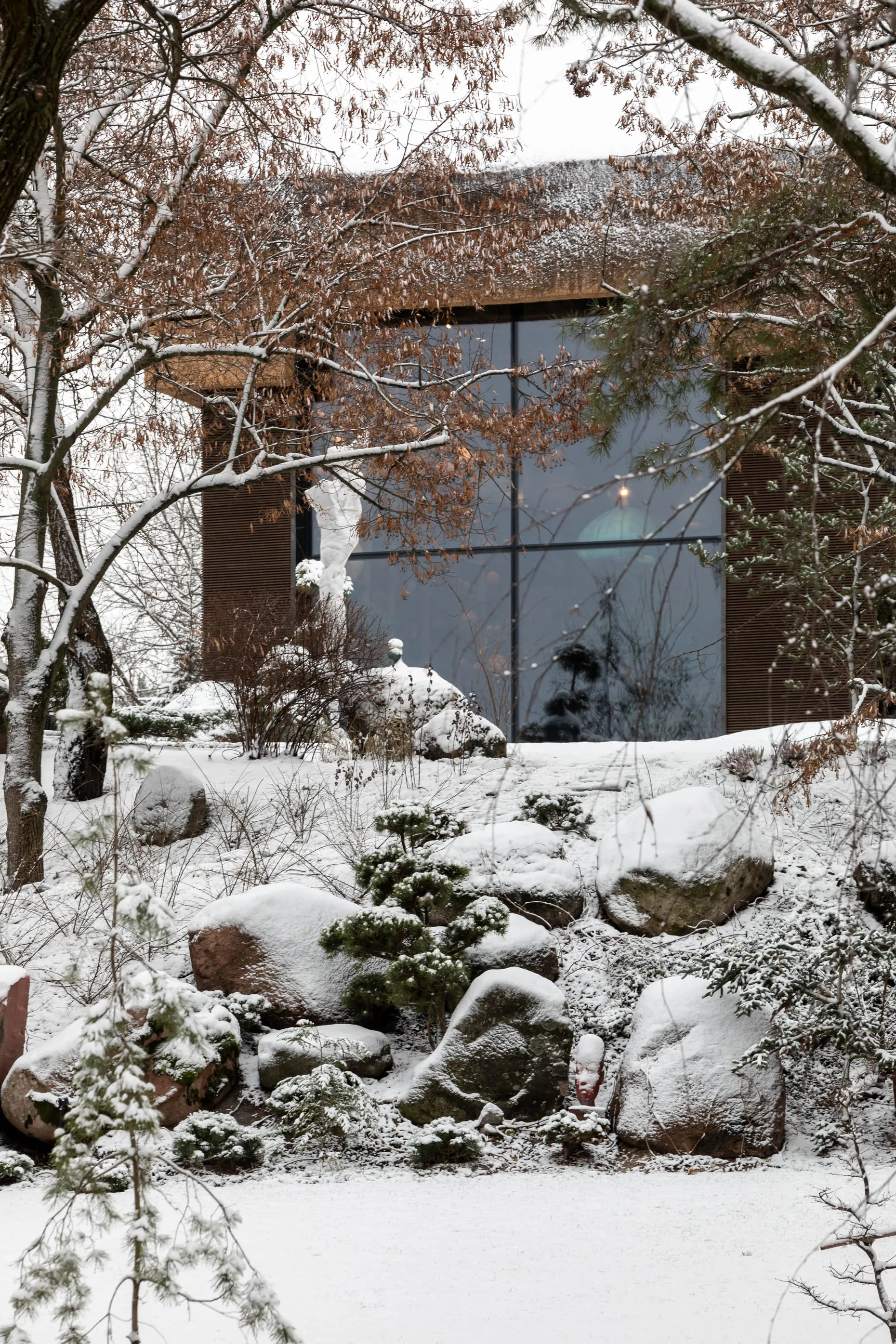
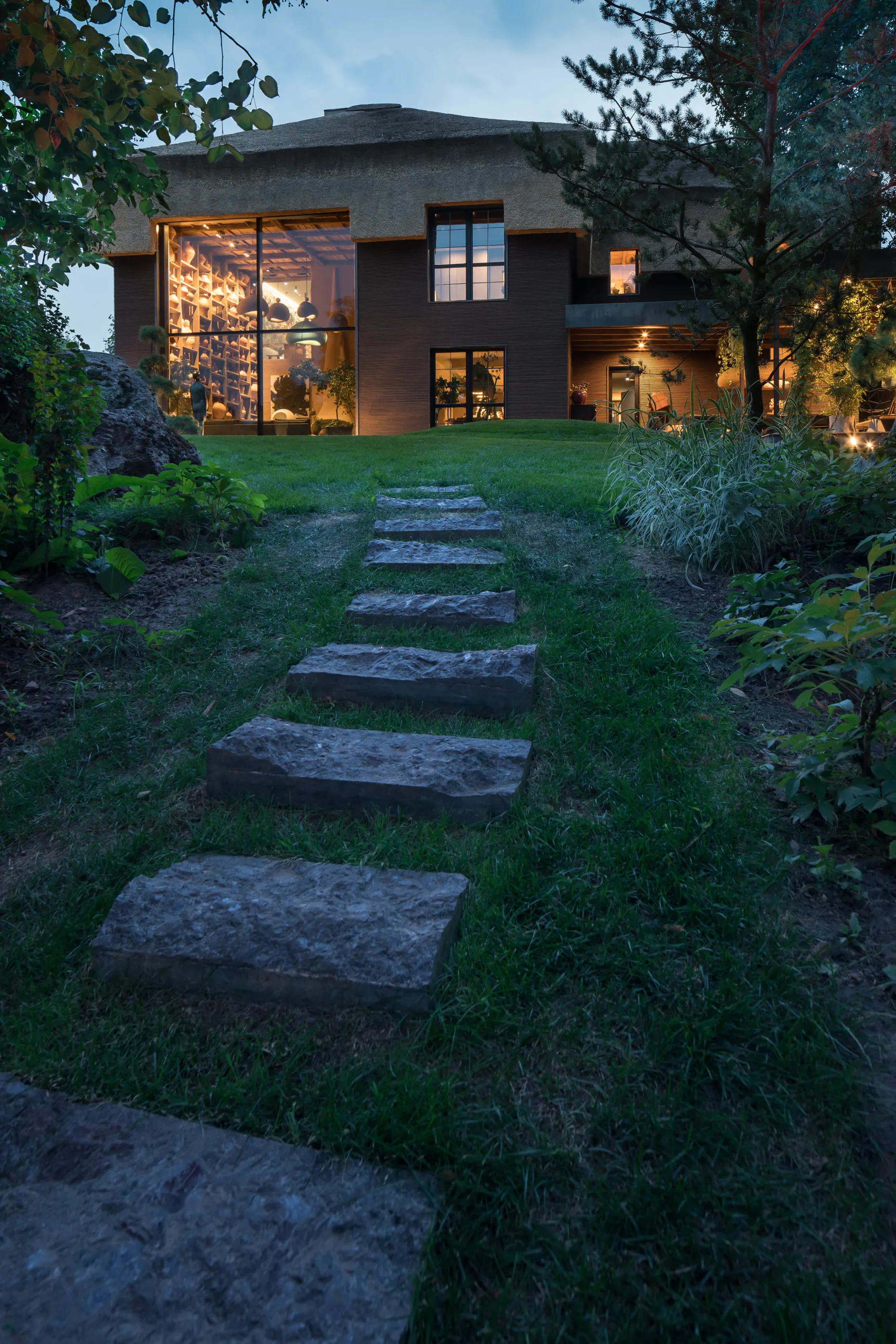
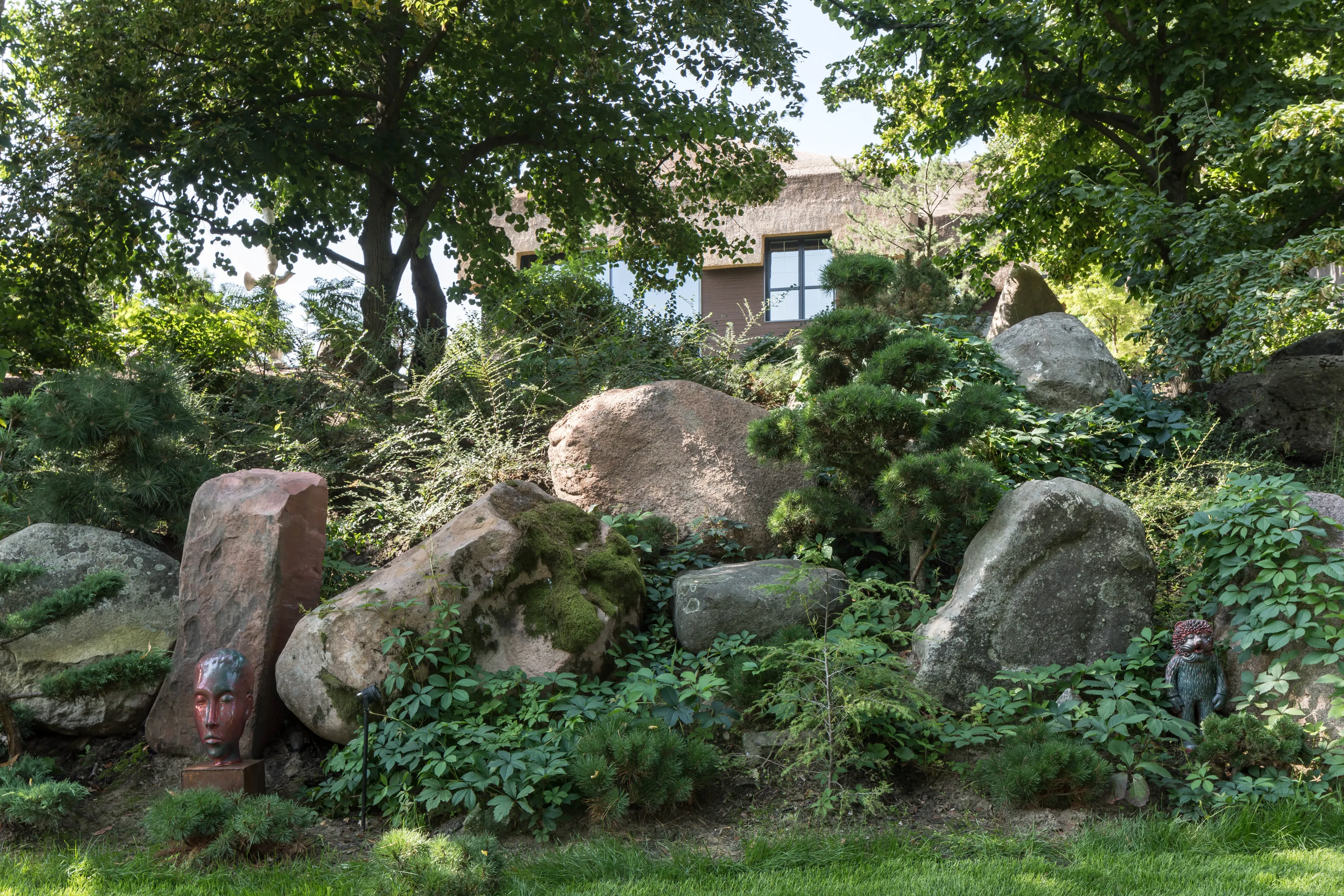
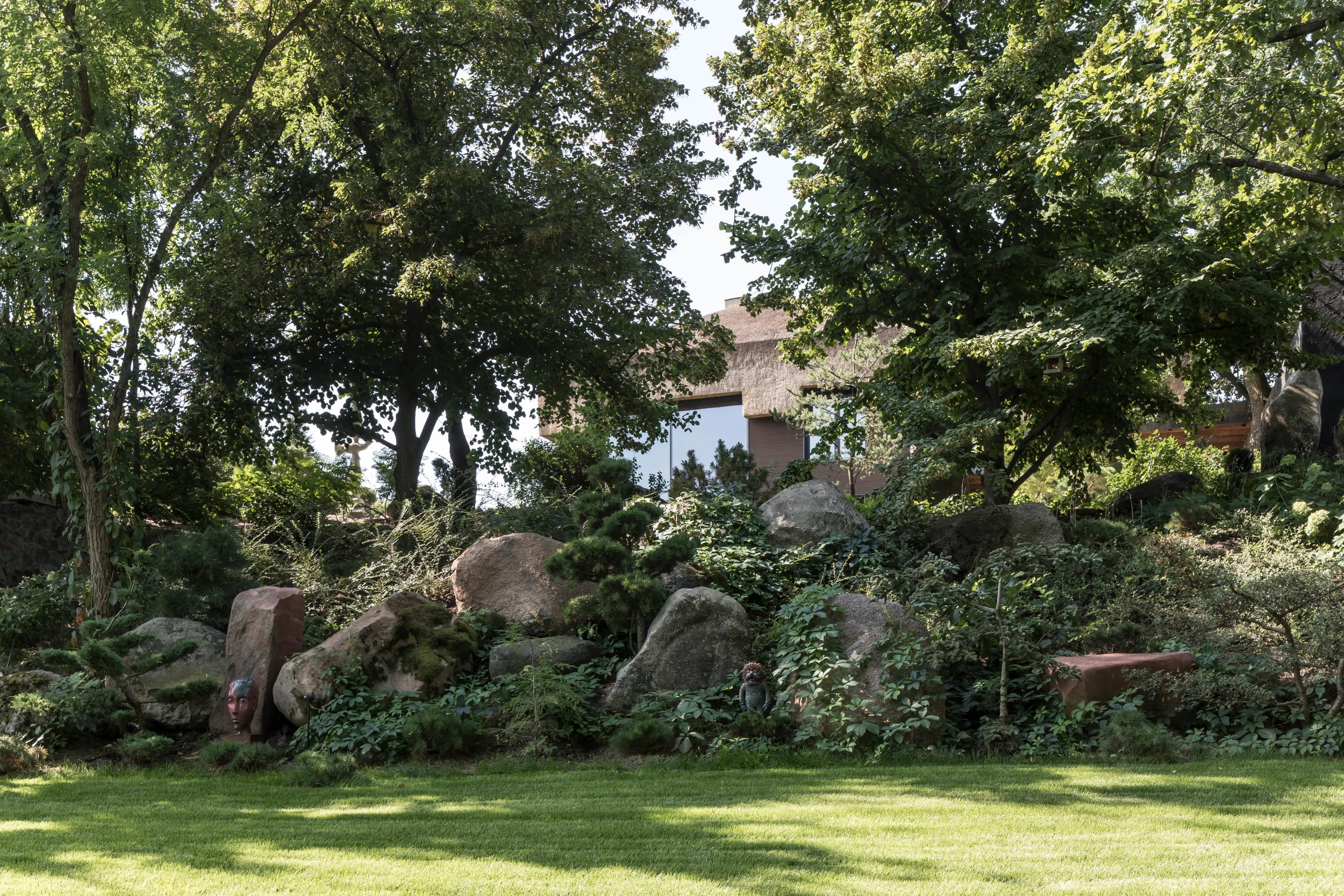
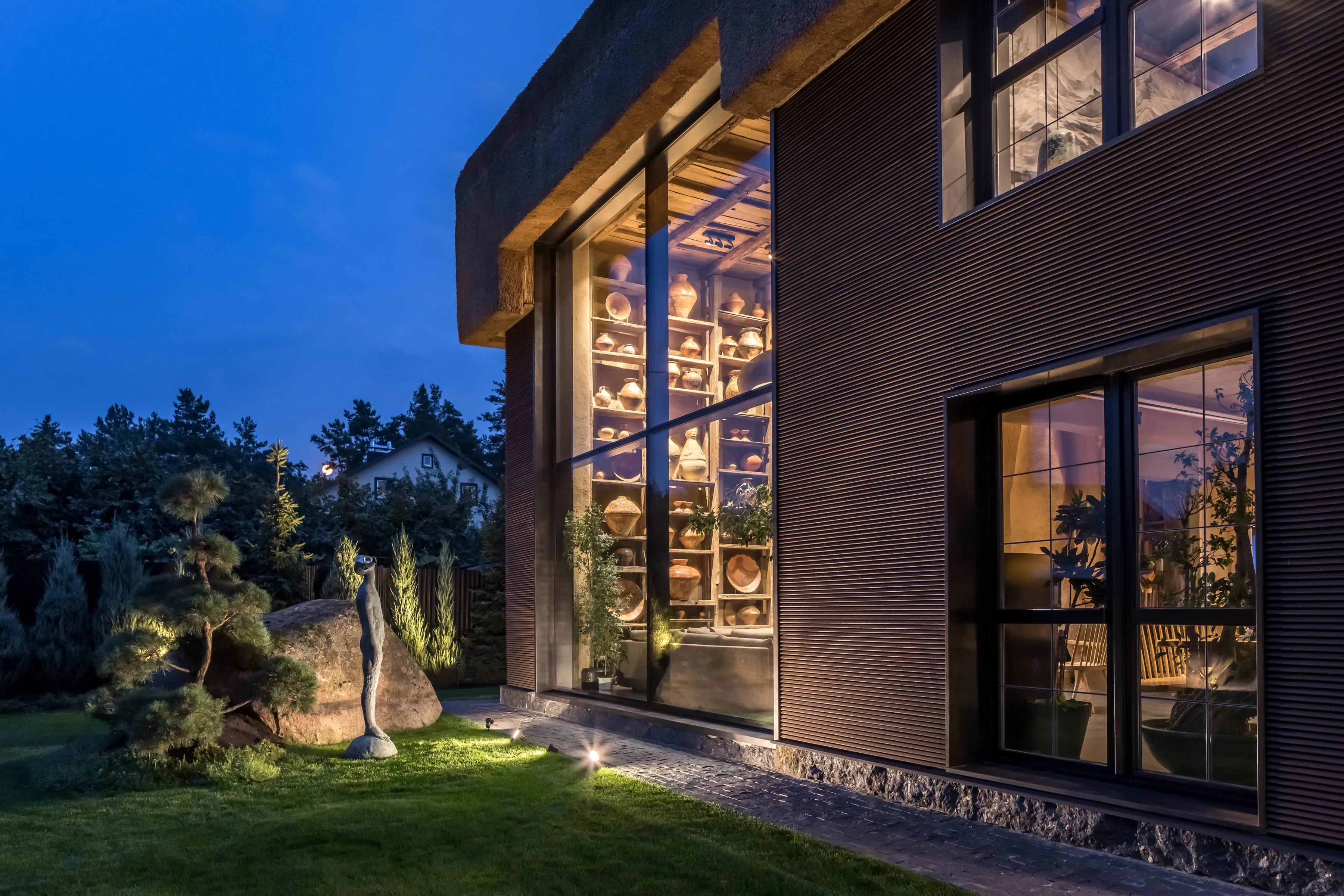
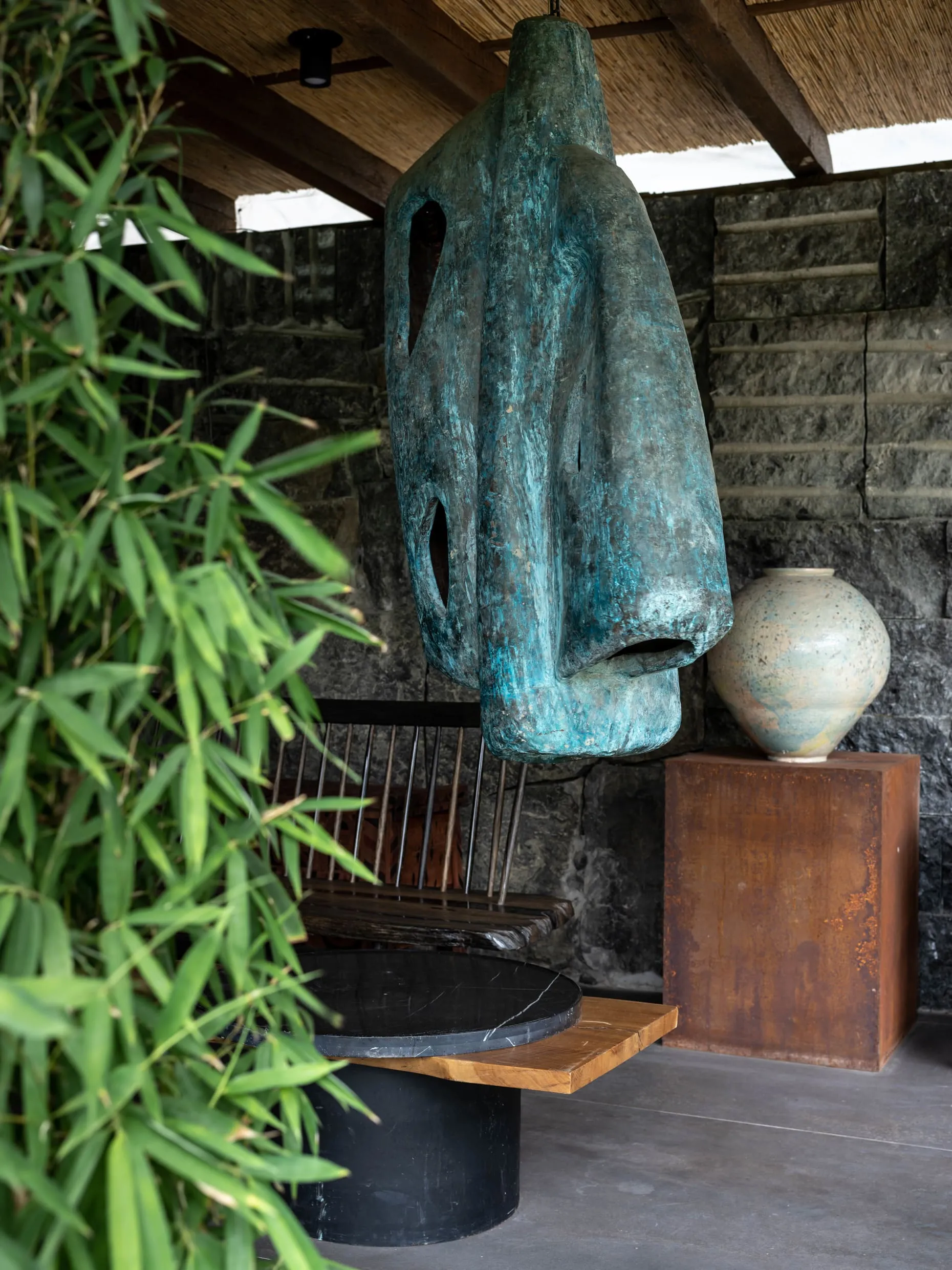
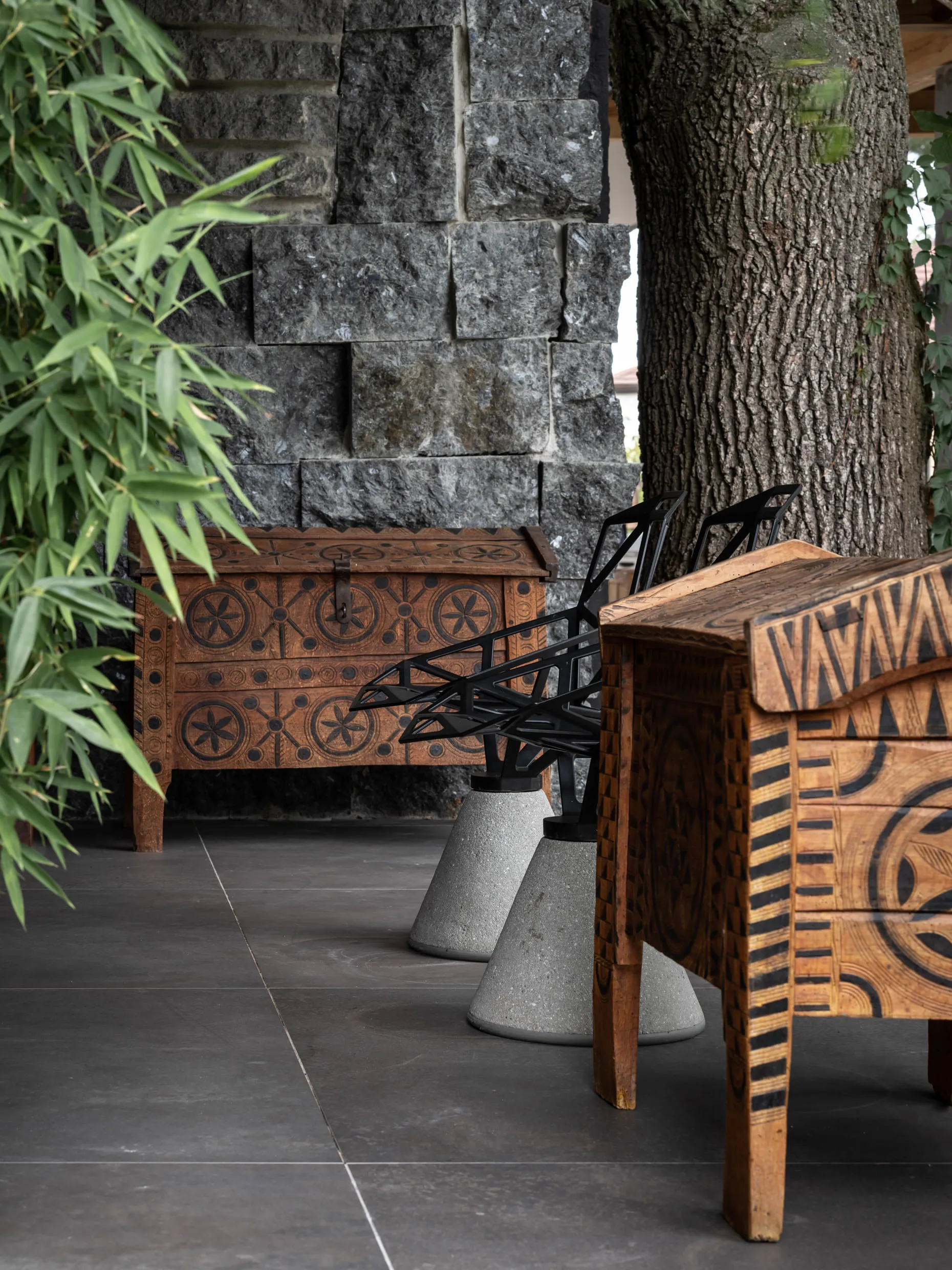
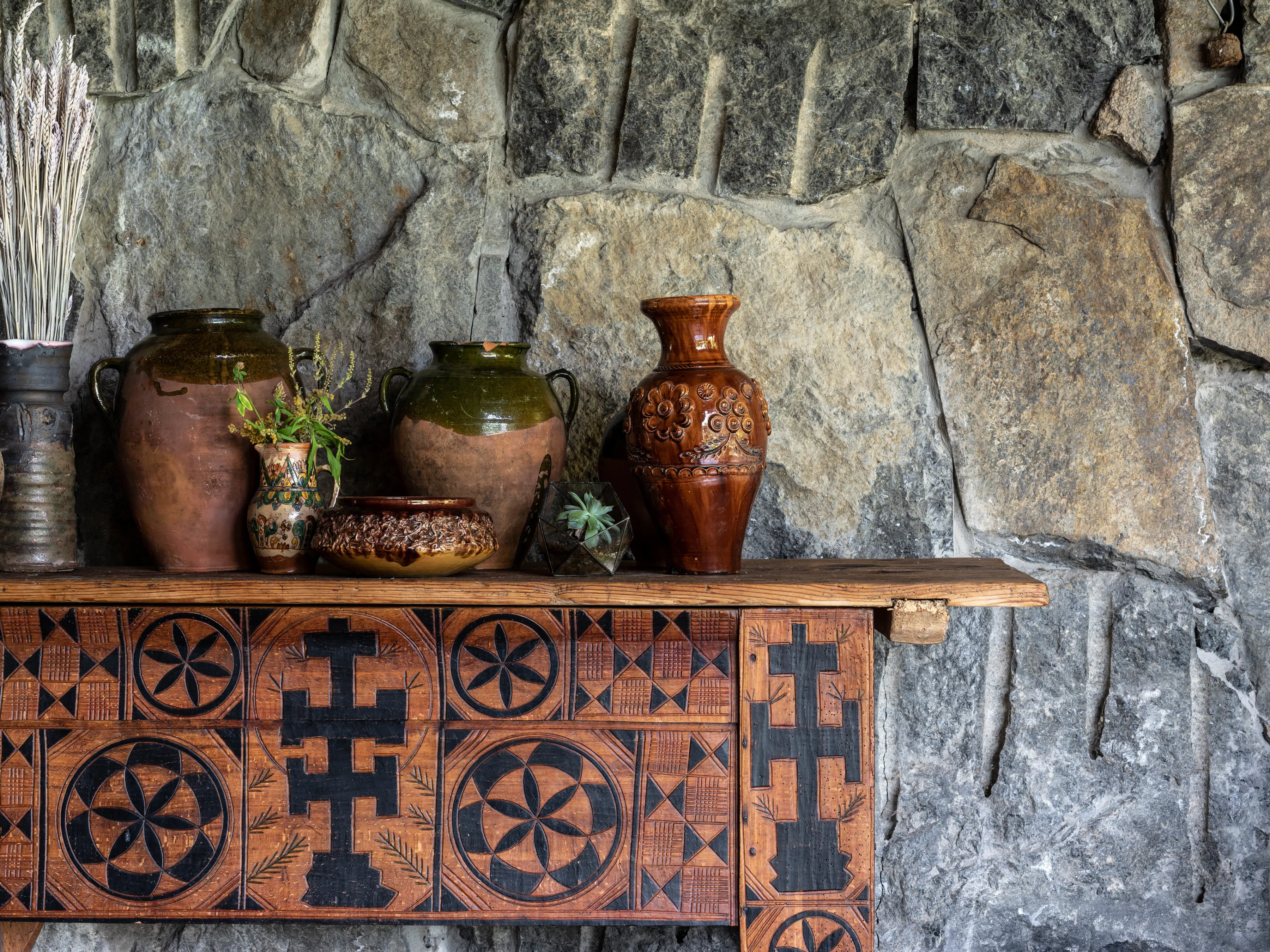
We pass the stone path to the house and find ourselves in a garden gallery with scents of conifer and freshly mown herbs. Here, Japanese maples and cherry trees met traditional Ukrainian zoomorphic pottery and contemporary art. Here, there are 250 tons of stones and several perspectives, as common for Japanese gardens.
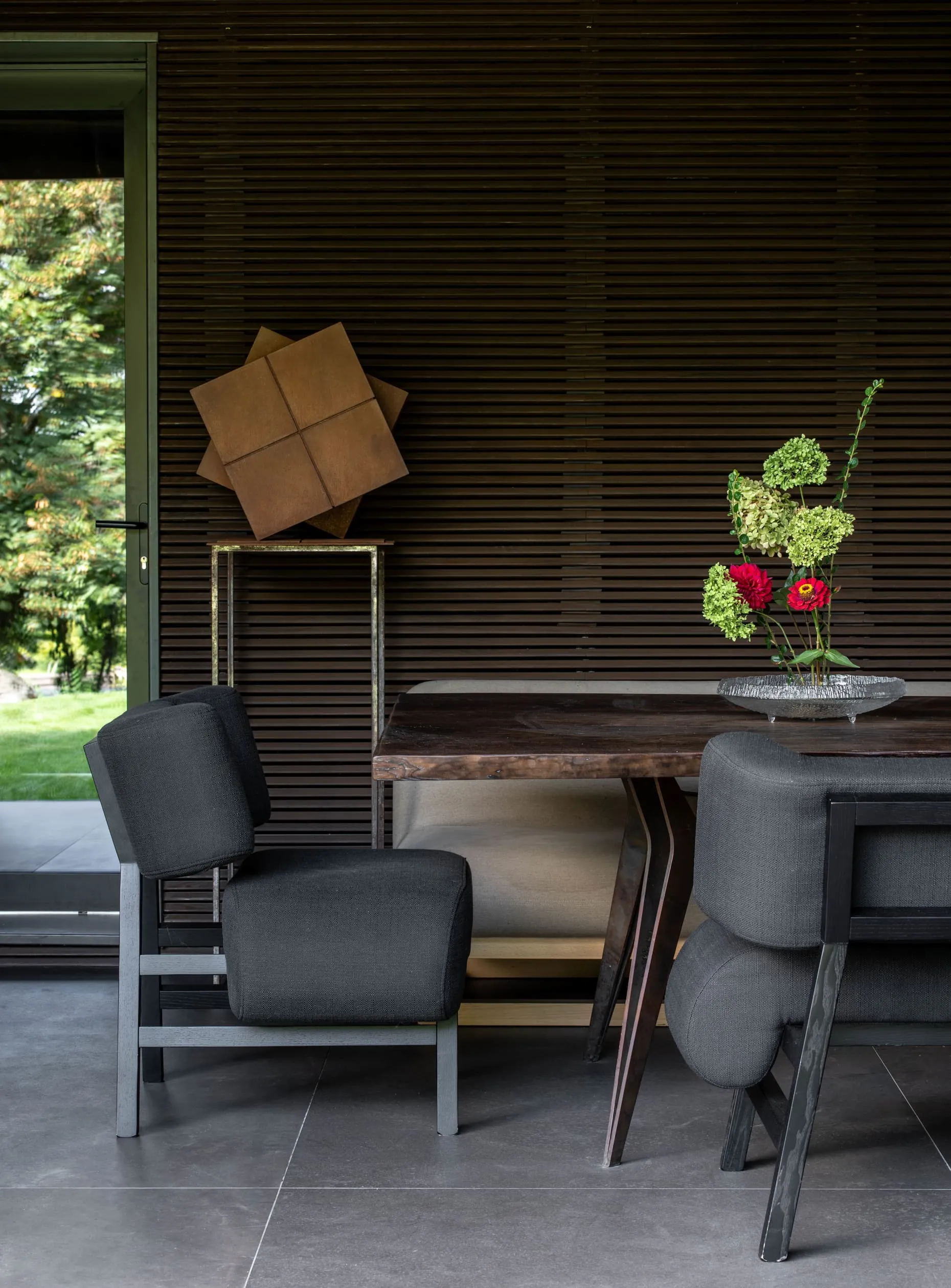
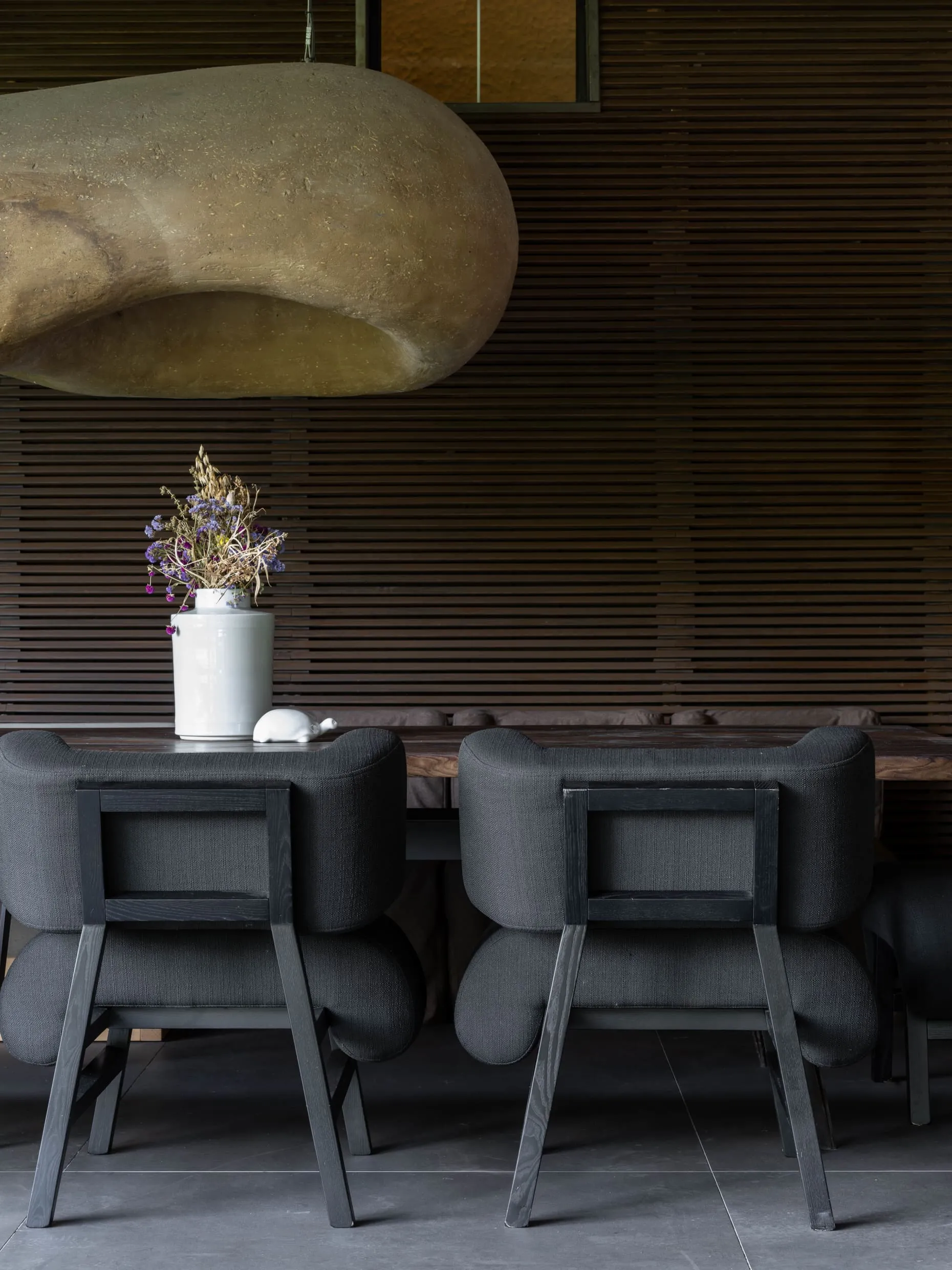
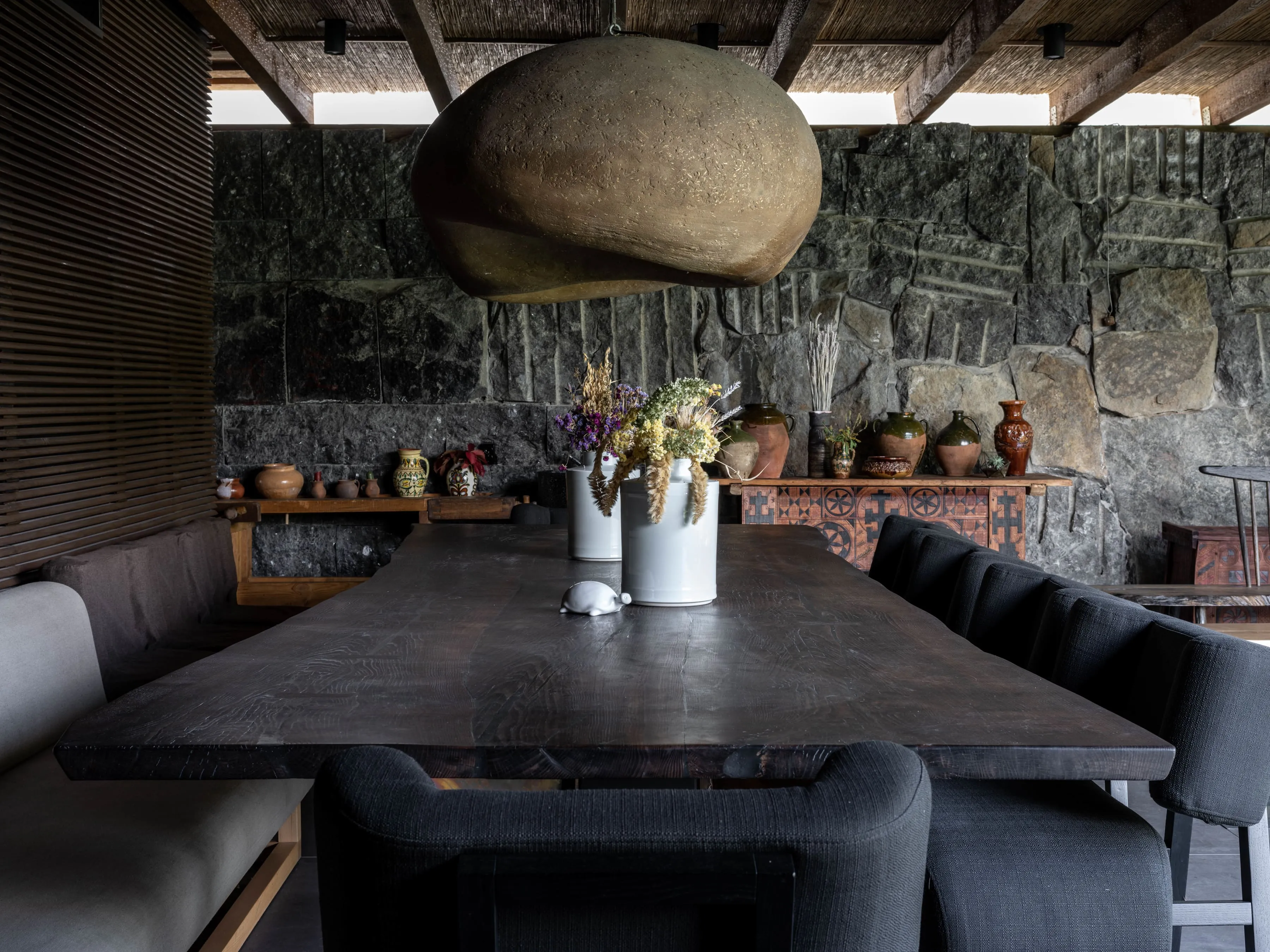
The dining area is the family’s favourite one. It sings an ode to a tree — warm, simple, perfect. Every place at the table offers a great view — to the living room, garden or terrace. If you ask Serhii what Japan means to him, a tea ceremony will be the first mentioned. Teacups are more commonly used in this home than wine glasses.



The house is built in contemporary Ukrainian style under the influence of the Japanese philosophy of wabi-sabi that finds beauty and harmony in imperfections. Being almost completely enclosed by a minimalist concrete fence, its character can be seen with half an eye — a proud thatched roof hangs over the wooden rails on the walls.
These materials are traditional for both Ukrainian and Japanese cultures.
“Thanks to Japan, I learned to love Ukraine. When I went to Japan for the first time and saw how they appreciate their heritage, I understood that Ukrainian culture is extremely rich but we rarely rate it highly. Japan has given my country back to me. It has opened my eyes and, most importantly, my heart to the wealth I have always had — my homeland. Even if I wanted to do Japanese design — it would not work. Because I’m Ukrainian. I create Ukrainian design transmitted through the lens of Japanese perception of beautiful”, — says Serhii Makhno.
This house was built by the Ukrainian architect Serhii Makhno for his family. It is located in Kozyn, a village in the suburbs of Kyiv. Here, more than 15 years ago, Serhii Makhno began his journey. And then he decided that he will live here.
We pass the stone path to the house and find ourselves in a garden gallery with scents of conifer and freshly mown herbs. Here, Japanese maples and cherry trees met traditional Ukrainian zoomorphic pottery and contemporary art. Here, there are 250 tons of stones and several perspectives, as common for Japanese gardens.
The Japanese believe that the stone itself must choose where to lie. And so it happened here — in a few months, the garden grew on the site of a wasteland by itself, without human intervention. Now squirrels and nightingales live here, and the morning tastes good. And now there is silence. And if we do not have anything more beautiful to say than silence, then we choose to remain silent.
The dining area is the family’s favourite one. It sings an ode to a tree — warm, simple, perfect. Every place at the table offers a great view — to the living room, garden or terrace. If you ask Serhii what Japan means to him, a tea ceremony will be the first mentioned. Teacups are more commonly used in this home than wine glasses.
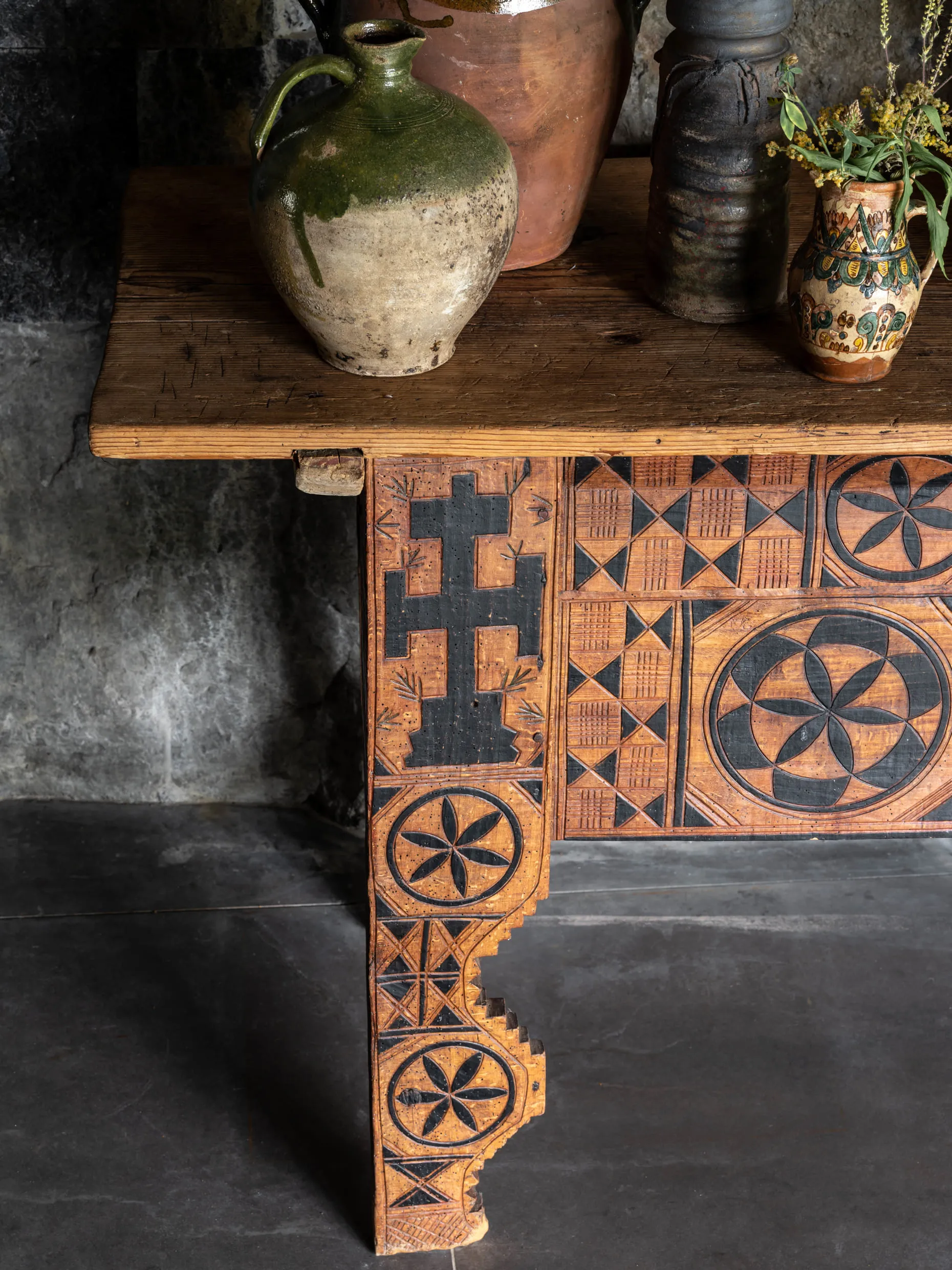
The house has two kitchens. The minimalism of the open one is emphasized by a wooden table from a flea market, that replaced the kitchen tabletop. This table was born in 1935, and several generations of the Hutsul family have dined at it.