Maison & Objet 2017: see, feel and listen to the silence
Articles
17.02.05
Maison & Objet Paris is the temple of inspiration for designers and architects. The big European exhibition of interior design and home furnishings takes place twice a year showing the world the best furniture, lighting, decorations and textiles.
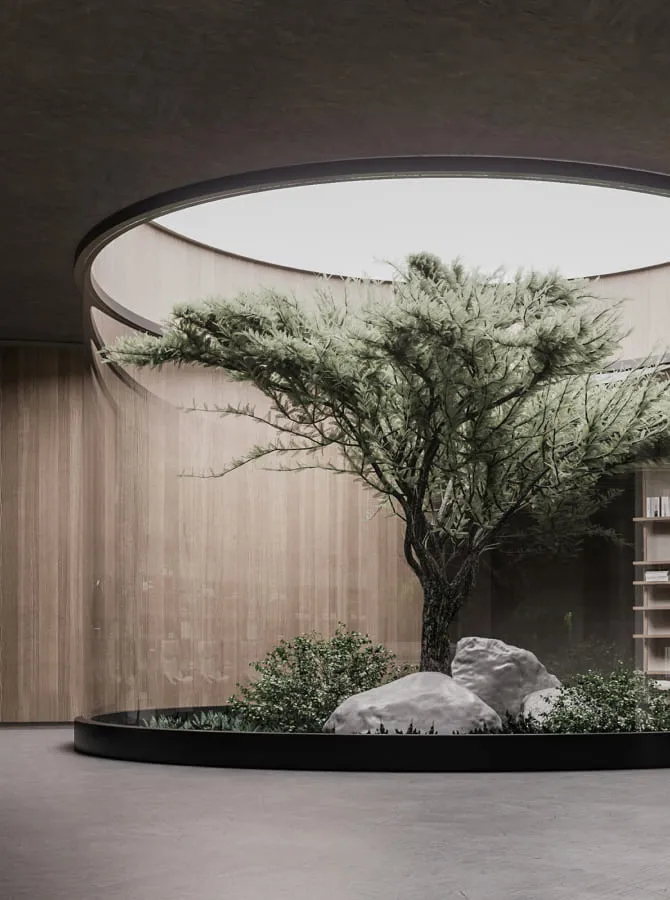
The main word of Maison & Objet 2017 was SILENCE. Serhii Makhno told about his impressions from the exhibition and shared his philosophy of silence.

Silence is about the things lying on the surface. Something difficult to create.
Silence is about imperfection. A ceramic cup with birthmarks was obtained during the firing.
Silence is about naturalness. The morning, when the sun is almost burst into flames, but the misty haze still stands.
Silence is about simplicity. When you come into a half-empty room, it fills you.
Silence is about the ability to keep a history. The herbarium from childhood on the walls, or a full of flower vase inherited from your grandmother.
When you hold in your hands not just tea, but personally collected and brewed bundles of mint or linden tree – you hold a silence. When you leaf through the pages of an old book, you feel the smell and the sound of silence.
The silence is deeper than concrete, glass and other materials. Silence represents the essence. Things that are creative, not destructive.
Silence is about searching for meaning
Wabi Sabi is the silence.


The idea to make the quiet theme of the exhibition belongs to Elizabeth Leriche. The designer states that today we are in the thrall of the sounds haunting us at every step. Silence means luxury, a symbol of returning to the origins.
Own reflections Leriche materialized in the black cube – an installation, the walls of which were hung with screens. The noise and chaos surrounded the man inside. Exit out of the room is metaphorical. A long corridor with shimmering words and Silence, in the end, says we should appreciate it.

Our going to silence is natural. It is a direct consequence of the fact that society tries to live consciously. We use fewer materials, keep the visual interior cleanliness and don’t overload the space with unnecessary things. We like the air, frame structures and simple archetypal forms near to which our mind rests.


The main mass of the exhibition didn’t speak the silence. Despite the kitsch and superficiality, people can find unique grains. Among the rubbish of the antique booth, you discovered old cups and vases of rosewood, which was silent. Only the blinds didn’t notice it. Not paying attention to, not concentrating, not feeling.

The exhibition included various measurements of silence. Three plates at the entrance or fired ceramics are direct examples of silence, understandable for all. Another thing is, for example, the herbal beverage prepared for the guests. Important was the ritual: what to pour in, how to serve. I would choose a rough ceramic cup or china. As a board – a three hundred piece of wood. At first sight, these are details, but they have a weight and make up what we call silence.


As a central stand among all the expositions for me, I identified Japanese ceramics. I had seen those pieces in the Belgian exhibition of Axel Vervordt and then at Maison&Objet. It was both the moments when I said: it was the silence.

THE SILENCE COULD NOT ONLY BE SEEN BUT ALSO BE LISTENED TO. USING THE SPECIAL HEADPHONES GUESTS SHIFTED INTO THE SILENCE OF HALEAKALĀ, THE VOLCANO OF THE HAWAIIAN ISLAND.
The silence appeared in porcelain plates with blue diffused enamels and in the mosaic tables. I found it in woven rope lights and semi-transparent ceramics made in the colour of dirty concrete. The wooden furniture with thin, almost jewellery lines or on the contrary – contrasting black details.


The silence was even in copper panels with ten-colour toning. 10, do you imagine? Some see copper as the colour, while others have sought new shades for years.


The concept of time and the perception of slowness accumulated in the crystal bookcase Deep Sea by Nendo. Pedantically arranged slabs create a gradation of blues, attracting the eye.

Among NOT quiet design, I liked the exhibition “Designer of the Year”. According to Maison & Objet, the first is Pierre Charpin. I describe his style as plastic minimalism, the combination of formal simplicity and soft-flowing lines. The colours he uses are smooth, and the chromatic elements are highlighted.
The interesting project is the kreo “Marbles and Clowns”, a collection of vases, where the designer played on the ambivalence of a clown.

In general, as I said to my wife after the exhibition: people who wanted to crystallize the silencе, did it.
Yes, Maison & Objet is getting worse. Yes, there is a lot of amateurism and the views of people who do not want to go and see the essence. But if you want to find the silence, you will find it.